
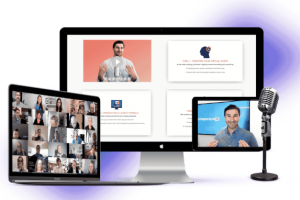

Liam Austin – Podcast Revenue Growth System: A Four-Stage Plan for Turning Podcast Visibility Into Business Opportunities
A podcast interview can introduce you to hundreds or thousands of people who have never heard of your business. It can put your ideas in front of a relevant audience, give potential customers a chance to hear how you think, and create an opportunity to build trust before anyone visits your website.
But there is a question many business owners overlook: What happens after the interview ends?
If listeners enjoy the conversation but have no clear next step, the opportunity may stop at awareness. If you have no process for finding suitable shows, you may struggle to get booked in the first place. And if you are invited onto a podcast but cannot explain your message clearly, the appearance may not produce the kind of attention you hoped for.
Liam Austin’s Podcast Revenue Growth System is designed around this larger picture. Rather than treating podcasting as a promotional activity that begins and ends with an interview, the training presents it as a connected business-development process.
The program is organized into four workshops. Each addresses a different part of the journey: getting invited, making the most of the conversation, building a platform of your own, and creating a path from attention to leads and potential customers.
The first challenge: Give podcast hosts a reason to invite you
Getting booked as a guest is not just a matter of sending a large number of emails. Hosts receive pitches from people who want exposure, promotion, or a chance to talk about their products. A generic introduction does little to explain why a particular guest would be valuable to their audience.
The first workshop, Standout Speaker Profile: Position Yourself as the Guest Every Podcast Wants, focuses on improving how you present yourself to potential hosts.
The advertised topics include:
- Creating a speaker profile that communicates your expertise and authority.
- Writing personalized pitches for relevant podcasts.
- Exploring Talks.co as a way to simplify podcast booking and discovery.
A strong speaker profile should make it easier for a host to understand what you discuss, who benefits from your perspective, and why your experience fits the show. It is essentially a compact introduction to the value you can bring to an audience.
The personalized-pitch component is equally important. Instead of sending the same message to every show, the idea is to approach podcasts with a reason for making contact. That means considering the show’s audience, its subject matter, and the kind of conversation you could contribute.
This section is especially relevant to consultants and coaches who already have useful expertise but have not developed a consistent guest-booking process. It gives them a framework for presenting that expertise in a way that is easier for podcast hosts to evaluate.
The second challenge: Make the interview worth listening to
Being accepted as a guest is only the beginning. Once the microphone is on, you have a limited amount of time to communicate your ideas, hold attention, and give listeners something worth remembering.
The second workshop is called Command the Mic: How to Deliver Engaging, Value-Packed Interviews That Convert.
Its advertised focus includes interview preparation, storytelling, message alignment, and guiding listeners toward an offer without making the conversation feel like a hard sales pitch.
This is a useful area to work on because a guest appearance is not a conventional sales presentation. Listeners are usually there for an interesting conversation, a useful explanation, or a fresh perspective. If every answer sounds like a rehearsed advertisement, the experience can become uncomfortable for both the host and the audience.
Preparation helps you avoid that problem.
You can enter an interview with a few important ideas in mind, examples that make those ideas easier to understand, and a clear sense of what you want the audience to take away. That does not mean memorizing every sentence. It means knowing the message you want to communicate while leaving enough room for a natural conversation.
Storytelling is another advertised part of this workshop. A well-chosen example can make an abstract business concept easier to follow. It can also help listeners understand why a particular lesson matters rather than simply hearing a list of recommendations.
The conversion element is about connecting the conversation to a relevant next step. That could mean directing interested listeners toward a resource, a lead magnet, or an offer that makes sense in the context of the discussion.
For coaches, consultants, and service providers, this is an important distinction: the aim is not to turn every interview into a sales call. It is to make sure that someone who wants to learn more has a natural way to continue the conversation.
The third challenge: Build a platform you do not have to borrow
Guest appearances can help you reach other people’s audiences, but you do not control their publishing schedules, episode formats, or long-term content plans.
That is where the third workshop, Own the Stage: Dominate Your Niche with Your Own Show, takes the discussion in another direction.
The training explores the benefits of hosting your own podcast, YouTube channel, video series, or annual summit. It also covers planning for consistency and using cross-promotion to keep an audience engaged.
This part of the system is worth considering even if you are not ready to launch a podcast immediately. The underlying idea is to think about the role your own platform could play in your wider marketing strategy.
A podcast can give you a regular place to publish conversations and ideas. A video series can help you explain your expertise in a format that suits your audience. A summit can bring several relevant voices together around a shared subject and create opportunities to build relationships with speakers and attendees.
These are different formats, but they share a common requirement: a clear reason for existing and a realistic plan for keeping them active.
The workshop’s emphasis on consistency is particularly relevant. Starting a show is often the exciting part. Maintaining a useful publishing schedule, choosing relevant topics, and finding ways to promote each release are the ongoing tasks that require a system.
Cross-promotion also deserves attention. A show does not have to depend entirely on its own audience. Guests, collaborators, email subscribers, and complementary businesses may all provide opportunities to introduce the content to new people.
This section broadens the program beyond podcast guesting. It encourages participants to think about building an owned platform alongside their appearances on established shows.
The fourth challenge: Give interested listeners somewhere to go
Visibility is useful, but it is not the same as revenue.
The fourth workshop, Podcast Profit Method: Monetizing Your Podcast and Guest Appearances, addresses the connection between attention and a business offer.
The advertised topics include:
- Creating a lead magnet that gives listeners a reason to stay connected.
- Designing a simple funnel that can guide people toward becoming customers.
- Using authentic pitching techniques during interviews.
A lead magnet can be a checklist, guide, training resource, or another useful item related to the subject discussed in an episode. Its purpose is to give interested listeners a clear next step while allowing a business to build a direct relationship with them.
The funnel then provides a structure for continuing that relationship. Someone may discover you through an interview, download a resource, receive helpful follow-up emails, and eventually decide whether your service or product is appropriate.
This process will look different for different businesses. A consultant may invite listeners to explore a strategy session. A coach may offer a relevant introductory resource. A service provider may direct people toward a page explaining how their service works.
The key is alignment. The next step should make sense in relation to the conversation and the needs of the audience.
That is why the workshop’s focus on authentic pitching matters. A relevant invitation can help listeners continue learning. An unrelated or overly aggressive pitch can undermine the trust built during the interview.
Beyond the four workshops: Planning and promoting your own workshop
The sales page also describes additional tools for creating, marketing, and launching a workshop.
These materials cover choosing a workshop topic, identifying a useful quick win for attendees, validating an idea, attracting participants, considering workshop pricing, and handling the technical setup.
The launch material discusses both live and evergreen workshop formats, along with ways to invite attendees toward mid- and high-ticket offers.
This is a useful extension of the wider system because podcast appearances and owned platforms can create interest in a focused workshop. A well-planned session can give potential customers a closer look at your approach and help them understand the value of your expertise.
The page also advertises a Q&A session with Liam, including the opportunity to ask for feedback on workshop topics and backend offers. Because support arrangements can differ between versions and purchase options, confirm whether this session is included in the package being sold.
Who is likely to benefit from this training?
The program is most relevant to people who have an existing business, service, or area of expertise they want to make more visible.
Coaches and consultants may find the guest profile, interview preparation, and lead-generation material relevant to their work. Podcast conversations can help explain their approach and introduce their services to people who may not otherwise encounter them.
Freelancers and service providers can use the ideas to explore podcasts with audiences that match the clients they want to reach. The important part is choosing relevant shows rather than chasing appearances simply for the sake of being featured.
Entrepreneurs building a personal brand may appreciate the combination of guest appearances and owned media. It provides a way to think about visibility from both sides: participating in established platforms and developing one of their own.
Established experts may find the monetization section particularly relevant if they already receive invitations but have not built a clear process for turning those appearances into ongoing business conversations.
The material may be less immediately useful to someone who has not yet decided what they sell or who they want to serve. Podcasting can support a business strategy, but it cannot replace the need for a defined audience, a clear offer, and a reason for people to buy.
What to expect from the learning format
The creator’s sales page describes four independent workshops, each approximately 90 minutes long. Together, they cover guest booking, interview delivery, hosting your own platform, and podcast monetization.
The advertised bundle also includes workshop-planning and marketing tools and describes a Q&A session. These details should be checked against the exact purchase version before listing them as guaranteed inclusions.
This is a workshop-based program rather than a promise of automatic podcast bookings or a done-for-you marketing service. Participants will still need to identify relevant shows, prepare their profiles, write pitches, practice interviews, create useful resources, and implement their own follow-up systems.
The strongest way to approach the training is to apply one part at a time. Improve your speaker profile first. Then build a targeted list of shows and begin outreach. Once you are getting conversations, work on interview preparation and the next step you want listeners to take.
If hosting your own platform is part of your plan, treat it as a separate project with its own content schedule and promotion process.
A realistic look at the strengths and limitations
The main strength of the Podcast Revenue Growth System is its connected structure. It does not focus only on finding podcast appearances or only on monetizing a show. It brings together the steps that can connect visibility with business development.
The four-workshop layout also makes the subject easier to navigate. Each session has a defined purpose, which can help participants identify the area they need to work on.
There are limitations to keep in mind. The training cannot guarantee that hosts will accept your pitches, that listeners will become leads, or that a funnel will generate sales. Those outcomes depend on factors such as your expertise, offer, audience fit, outreach quality, interview performance, and follow-up.
The program also covers several related activities, including guesting, hosting, video content, summits, and workshops. Some buyers may want to focus on one of these areas first rather than trying to implement everything at once.
Final assessment
Liam Austin’s Podcast Revenue Growth System is best understood as a business-focused podcasting framework for people who want to connect visibility with lead generation.
Its four workshops create a clear progression: become easier for podcast hosts to discover, communicate your ideas effectively, build a platform of your own, and give interested listeners a useful path toward your business.
For a coach, consultant, or entrepreneur who already has a meaningful offer but has not built a consistent podcast strategy, that combination may provide a helpful starting point.
The real value will come from implementation. A better profile needs to be used in outreach. Interview advice needs to be practiced. A lead magnet needs to be created. A funnel needs to be connected to a relevant offer. The training provides a framework for those activities, but the work and business decisions remain yours.


Reviews
There are no reviews yet.