


Jacob Caris – The Lifestyle Business Academy
Build the business around the life you want to live
A business can generate revenue and still take over your entire calendar. Endless content creation, sales conversations, complicated funnels, and the pressure to stay visible can leave an entrepreneur with very little freedom.
That tension is the starting point behind Jacob Caris’ Lifestyle Business Academy.
The program focuses on the business systems behind an online coaching, consulting, or expertise-based company. Its central message is straightforward: build an offer people understand, create a reliable way to attract potential buyers, and develop a sales process that does not depend on personally handling every interaction.
This is not simply a collection of tips about getting more followers. The broader training library covers the commercial foundations of an online business, from offer design and positioning to marketing, sales, traffic, and operational systems.
For someone who already has a skill, professional experience, or an area of expertise they want to monetize, that combination can make the material worth exploring.
The business model comes before the marketing
One recurring theme in the Academy material is the importance of having a defined offer.
It is easy to spend weeks creating posts, testing advertisements, or building a website without having a compelling reason for someone to buy. The program’s approach puts more attention on the offer itself: what problem it addresses, who it serves, and why a potential customer should take the next step.
The reported training library includes material on developing signature coaching and consulting offers, simplifying positioning, and creating a clear path from prospect interest to purchase.
A useful way to think about this process is through three questions:
- Who is the offer for? A specific audience is easier to communicate with than a broad market of everyone who might possibly be interested.
- What problem does it solve? A clear commercial problem gives the offer a practical purpose.
- How does someone buy? The sales process should be understandable, accessible, and appropriate for the price and complexity of the service.
This foundation matters whether the business sells consulting, coaching, digital education, or another expertise-based service.
From expertise to a sellable offer
A person can be very good at their profession and still struggle to package that knowledge into something customers can purchase.
The Academy’s reported offer-development material explores the process of turning experience into a structured service. This includes identifying a valuable customer problem, shaping an offer around a desired outcome, and communicating its value.
The third-party course outline references signature offers in the higher-ticket coaching and consulting space, including offer setup and invitation-document examples.
An invitation document is an alternative to making every prospect sit through a traditional sales presentation. It can explain the offer, describe who it is designed for, outline the next steps, and help a qualified prospect decide whether to move forward.
That does not mean every business should eliminate sales calls. Some services require detailed conversations, qualification, or custom proposals. The useful lesson is to choose a sales process that fits the offer rather than automatically copying someone else’s model.
The sales engine: turning interest into customers
A good offer still needs a way to reach buyers.
The Academy’s reported material covers several parts of the customer-acquisition process, including lead sources, sales messaging, follow-up, and campaign planning. It also references strategies for selling through written communication, including email and messaging.
These subjects are particularly relevant to businesses that receive enquiries but lack a consistent way to manage them.
A structured sales process can help an operator understand:
- Where potential customers are coming from.
- What information they need before making a decision.
- How to explain the offer clearly.
- When and how to follow up.
- Which enquiries are worth pursuing.
- Where prospects tend to lose interest.
The goal is not to turn every interaction into a scripted conversation. It is to make the buying journey easier to understand and manage.
Marketing that supports the business instead of consuming it
Another major theme is the relationship between content, brand positioning, and customer acquisition.
The reported curriculum includes sessions on personal branding, content strategy, preselling, platform distribution, and audience growth. It also references YouTube fundamentals, Facebook profile content, community funnels, and leveraging other people’s platforms.
This is a useful combination because content has more value when it serves a defined commercial purpose.
For example, a consultant might publish educational material that explains a common problem in their industry. That content can introduce the consultant’s approach, build familiarity, and give interested readers a reason to explore the service.
A creator might use a different strategy, focusing on a recognizable topic and building an audience around a specific area of expertise.
The point is to connect content with the offer and customer journey. Publishing more frequently is not automatically the same as building a stronger business.
Traffic: creating more than one path to discovery
A business that depends on one traffic source can become vulnerable when that platform changes its reach, policies, or costs.
The third-party course outline describes training related to organic traffic, paid advertising, audience partnerships, and other distribution opportunities. It also references guest experts discussing advertising, branding, email, YouTube, and online marketing.
These topics offer a wider view of how businesses can attract attention.
Different traffic sources serve different purposes:
Organic content can help demonstrate expertise and build familiarity over time.
Paid advertising can introduce an offer to a targeted audience, although it requires sensible budgeting, testing, and ongoing measurement.
Partnerships and other people’s audiences can create opportunities to reach relevant people through established networks.
Email marketing provides a direct communication channel with subscribers and potential customers who have chosen to hear from the business.
No traffic method guarantees a predictable flow of customers. Results depend on the offer, market, messaging, budget, execution, and the quality of the audience being reached.
The training library and workshop material
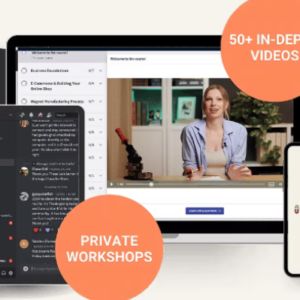
Third-party listings describe a substantial library of recorded content, including Academy sessions, workshops, interviews, and supplementary training.
Reported subjects include:
- Offer creation and signature offer setup.
- Fast Cash Rolodex training.
- Sales processes and follow-up.
- Personal branding and content strategy.
- Audience growth and traffic generation.
- Funnel and website development.
- Email marketing and customer communication.
- Business planning and strategic workshops.
- Guest expert interviews and discussions.
- Additional behind-the-scenes business sessions.
Some listings also identify material such as Million Dollar Mind Control, Daily Deposits, Brand Overhaul, and other workshop recordings.
These titles are descriptions of material reported by third-party catalogs, not a verified current official curriculum. The precise lesson count, file formats, dates, and completeness may differ between sellers and versions.
Who may find the material useful?
The subject matter is most relevant to people who are building or improving a business around knowledge, services, or digital products.
Coaches and consultants may be interested in offer positioning, customer acquisition, and ways to organize their sales process.
Freelancers and service providers may find the offer and marketing material useful when moving from individual projects toward a more clearly packaged service.
Digital entrepreneurs may want to explore the relationship between content, email, funnels, and paid traffic.
Creators and educators may benefit from considering how an audience can connect to a defined product or service rather than existing only as a social media following.
Established business owners may use the material as a source of ideas when reviewing their marketing and customer-acquisition systems.
It is not a substitute for legal, accounting, tax, or financial advice, and it should not be treated as a guarantee of business growth.
What to keep in mind before buying
The phrase “Lifestyle Business Academy” can refer to different versions of the training and membership experience.
Jacob Caris’ official website currently emphasizes the Lifestyle Business OS, describing a system built around offers, email, advertising, and a more automated sales process. Third-party listings, meanwhile, advertise a recorded Academy library with older sessions and additional training.
Those are not necessarily identical products.
Before purchasing, confirm the exact version being offered, the included files, whether the material is current, and whether the seller is authorized to distribute it. A third-party course listing does not establish that the seller has permission to redistribute the original program.
Likewise, recorded training should not be assumed to include direct access to Jacob, private client spaces, live calls, personalized strategy mapping, or other official membership services. Those benefits depend on the actual enrollment agreement and should be confirmed with the provider.
Final thoughts
Jacob Caris’ Lifestyle Business Academy covers an important set of topics for anyone trying to build a business around expertise: create a valuable offer, communicate it clearly, attract the right audience, and establish a sales process that can be repeated.
Its appeal is the connection between these different parts of business building. Instead of looking at content, traffic, offers, and sales as unrelated activities, the material presents them as parts of one commercial system.
For entrepreneurs who want to think more deliberately about how their business operates, the Academy’s reported training library offers a broad collection of ideas to study. The most useful results, however, will depend on applying the concepts to a real market, testing them carefully, and adapting the approach to the business rather than expecting a ready-made formula to do the work.


Reviews
There are no reviews yet.