

Car Rental Couple – Rideshare Mentorship Program
A car fleet is a business. Treat it like one.
Buying a vehicle is relatively straightforward. Turning that vehicle into a reliable rental asset is a different challenge altogether.
You need to understand the numbers before purchasing. You need an appropriate insurance arrangement, a suitable renter, a clear agreement, and a process for handling maintenance, late payments, accidents, and vehicle returns. Then there is the question of finding enough qualified drivers to keep the vehicle earning.
These are the details that separate a vehicle owner from someone operating a rental business.
Car Rental Couple – Rideshare Mentorship Program is built around that business model. It focuses on supplying vehicles to rideshare drivers and developing the operational systems needed to manage a rental fleet.
Rather than concentrating exclusively on how to drive for a rideshare platform, the mentorship takes an ownership and management perspective. It explores how to acquire vehicles, prepare them for rental, attract and screen drivers, organize agreements, and track business performance.
The interesting part of this model isn’t simply having more cars. It’s learning how to make informed decisions about every vehicle before committing capital.
The business model: vehicles, drivers, and operating systems
The basic concept is easy to understand.
A business acquires or controls vehicles and makes them available to eligible rideshare drivers under a rental arrangement. Drivers use those vehicles for their work, while the business owner manages the assets, rental agreements, insurance arrangements, maintenance, and customer relationships.
But the simplicity of the concept can be misleading.
A vehicle may generate rental revenue while also creating expenses. Financing, insurance, depreciation, repairs, registration, cleaning, downtime, and administrative work all affect the actual financial result.
The mentorship approaches this opportunity as an operating business rather than a passive-income shortcut.
Its public program description highlights several major areas of implementation.
Part one: Build the legal and operational foundation
Before buying vehicles or advertising rentals, an operator needs to understand how the business will be structured.
The program’s advertised legal and operational material includes:
- Business entity and legal structure
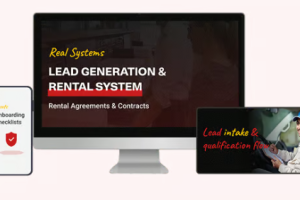
- Rental agreements and contracts
- Driver qualification and screening criteria
- Renter onboarding procedures
- Incident-handling protocols
- Insurance and tracker recommendations
- Risk management and protection systems
This is an important starting point.
A rental operation needs clear rules about who can use a vehicle, what responsibilities the renter accepts, how payments are handled, and what happens when something goes wrong.
Driver screening deserves particular attention. A potential renter should not be approved simply because they are willing to pay. Their eligibility, driving history, documentation, platform requirements, and suitability for the rental arrangement all matter.
The program also discusses agreements and onboarding procedures intended to make the relationship between the vehicle owner and renter more organized.
A practical reminder: Rental laws, business registration, insurance requirements, and rideshare platform rules vary by location. A contract template or general training lesson cannot replace local legal advice or confirmation from an insurer that the intended use is covered.
Part two: Choose vehicles with the numbers in mind
A vehicle can look like a bargain and still be a poor business purchase.
Purchase price is only one part of the calculation. The vehicle’s reliability, mileage, repair history, insurance costs, depreciation, fuel economy, and suitability for the intended rental arrangement can all affect its financial performance.
The Car Rental Couple program advertises a vehicle acquisition and preparation system designed to help operators approach purchases more systematically.
The publicly described topics include:
Deal analysis and vehicle selection
Evaluate potential purchases before committing money. The objective is to compare the cost of acquiring a vehicle with its expected operating expenses and realistic rental demand.
What to buy and what to avoid
Consider the characteristics that make a vehicle suitable or unsuitable for the intended rental market. A low purchase price does not automatically mean a good investment.
Vehicle preparation
Prepare a car before making it available to renters. This can involve inspection, cleaning, documentation, photographs, and checking that the vehicle meets relevant safety and operational requirements.
Maintenance and reserves
Plan for servicing, repairs, unexpected expenses, and periods when a vehicle cannot be rented.
This last point is especially important. A business that spends every dollar of rental income without setting aside maintenance reserves may find itself struggling when an expensive repair arrives.
Part three: Understand insurance and risk
Insurance is one of the most important parts of a rideshare rental operation.
The coverage appropriate for an ordinary personal vehicle may not cover every commercial rental arrangement or every period when a vehicle is being used for rideshare work.
The program’s advertised material includes insurance structure recommendations, risk mitigation, tracker recommendations, and renter-related protection procedures.
These topics deserve careful attention before a vehicle is placed into service.
An operator should understand:
- Whether the policy permits renting the vehicle to another person
- Whether rideshare use is covered
- Which driver is permitted to operate the vehicle
- What happens during personal use, rental use, and rideshare activity
- How deductibles and liability responsibilities work
- What documentation is required after an accident
- Whether the rideshare platform’s requirements are compatible with the rental arrangement
Do not assume that a standard personal auto policy, a general commercial policy, or a platform-provided policy automatically covers every situation.
The exact policy must be confirmed directly with the insurer. This is an area where professional advice and written confirmation are worth obtaining before investing in a fleet.
Part four: Find renters and create a consistent lead flow
Having a suitable vehicle is only one side of the business. The other side is finding qualified people who need it.
The program’s advertised lead-generation system includes a done-for-you website build, advertising setup guidance involving Facebook and Google, lead intake and qualification flows, and scripts for approving or declining applicants.
These resources are intended to help create a more organized rental inquiry process.
A typical renter acquisition process needs to answer several questions:
- Where will potential renters discover the vehicles?
- What information should an inquiry form collect?
- How will applicants be screened?
- Which documents need to be checked?
- How will approved renters receive the agreement and vehicle details?
- How will declined applications be handled professionally?
Having a defined process can reduce unnecessary back-and-forth and help an operator manage inquiries more consistently.
The advertised website and advertising assets should be verified against the actual package before purchase. Confirm whether they are genuinely built for each buyer, provided as templates, or delivered as training and setup instructions.
Part five: Manage the day-to-day rental operation
A rental business does not stop once a driver receives the keys.
Vehicles need to be tracked, maintained, inspected, and prepared for the next rental. Payments need to be monitored, agreements need to be renewed where applicable, and incidents must be handled according to documented procedures.
This is where operational consistency becomes important.
The program’s public description highlights onboarding, incident handling, driver qualification, maintenance planning, and fleet oversight.
A well-organized operator may want to maintain records for:
- Vehicle identification and registration
- Insurance documents and policy details
- Rental agreements and renewal dates
- Driver information and eligibility
- Payment history and outstanding balances
- Maintenance and inspection records
- Accident and incident reports
- Vehicle availability and downtime
These records are not glamorous, but they help an operator understand what is happening across the fleet.
They also make it easier to identify recurring problems, such as vehicles that require unusually frequent repairs or rental arrangements that consistently produce poor financial results.
Part six: Know the real profit, not just the rental revenue
One of the most important parts of operating a vehicle rental business is understanding the difference between revenue and profit.
Suppose a vehicle generates rental payments during a particular month. That figure alone does not tell you whether the vehicle is performing well.
You still need to account for financing, insurance, maintenance, depreciation, registration, cleaning, repairs, administrative expenses, and periods when the vehicle is not rented.
The program advertises Profit and Loss templates to help operators track financial performance.
A useful vehicle-level calculation might look like this:
| Financial item | What to track |
|---|---|
| Rental income | Payments actually received |
| Financing | Loan or lease obligations |
| Insurance | Applicable premiums and fees |
| Maintenance | Routine servicing and repairs |
| Depreciation | Decline in vehicle value |
| Downtime | Periods without rental income |
| Other expenses | Cleaning, registration, tracking, and administration |
| Net operating result | Revenue less relevant expenses |
This kind of tracking can help an operator compare vehicles and identify which parts of the business need attention.
It also provides a more realistic foundation for deciding whether another vehicle should be purchased.
Part seven: Think about fleet expansion carefully
Once an operator understands the process for managing one or a few vehicles, the next question is whether expansion makes sense.
Adding vehicles increases potential rental capacity, but it also increases capital requirements, insurance exposure, maintenance obligations, and administrative work.
The program is aimed at people who want to develop a multi-vehicle operation rather than simply experiment with a single rental.
Its advertised framework emphasizes capital deployment, repeatable vehicle acquisition criteria, driver management, operational oversight, marketing, and financial monitoring.
A sensible expansion decision should consider:
- Actual performance of existing vehicles
- Available capital and borrowing costs
- Local demand for rental vehicles
- Insurance availability and pricing
- Maintenance capacity
- Qualified renter demand
- Cash reserves for unexpected expenses
- The time required to manage additional vehicles
Growth is not automatically a sign of a healthy business. Expanding before the existing operation is stable can multiply problems instead of multiplying profit.
Who is this mentorship designed for?
The program is most relevant to people who want to approach rideshare vehicle rentals as a business.
It may be worth exploring if you are:
An aspiring fleet operator: You want to understand how to build a rental operation that serves rideshare drivers.
An existing rental business owner: You want more structured processes for acquisition, driver qualification, maintenance, and financial tracking.
An entrepreneur with available capital: You are considering investing in vehicles and want to understand the operational responsibilities involved.
A rideshare industry participant: You already understand part of the driver market and want to explore the vehicle-provider side of the business.
A systems-oriented business owner: You prefer documented procedures, agreements, financial templates, and repeatable workflows.
It may not be suitable for someone expecting a completely passive business, someone without the capital to cover vehicle and operating costs, or someone unwilling to coordinate local operations.
What to verify before joining
The mentorship’s public marketing describes a broad operational framework, but prospective buyers should confirm the exact package and support arrangements.
In particular, ask about:
- The precise video lessons and downloadable resources included
- Whether website and advertising assets are built for each buyer
- Whether individual mentorship or direct coaching is included
- The duration and format of support
- Whether templates are editable and suitable for the buyer’s jurisdiction
- Whether any insurance providers or rental platforms are formally affiliated with the creators
- Current payment, access, and refund terms
Do not assume that a downloadable copy of the training includes private coaching, direct implementation, website services, advertising setup, or ongoing mentorship.
Final perspective
Car Rental Couple’s Rideshare Mentorship Program focuses on the operational side of a vehicle rental business serving rideshare drivers.
Its advertised framework covers the full business journey: legal setup, vehicle selection, insurance considerations, renter screening, marketing, rental management, financial tracking, and fleet expansion.
That breadth is useful because success in this business model depends on more than finding drivers or purchasing inexpensive cars. The operator needs to understand the costs, manage risk, maintain vehicles, and create systems that can handle everyday problems.
The program may be relevant to entrepreneurs who have capital available and are prepared to manage a local rental operation. It should be approached as business education, not as a guarantee of passive income or a promise that every vehicle will be profitable.
Frequently Asked Questions
1. What is the Car Rental Couple Rideshare Mentorship Program?
It is a business mentorship and training program focused on building and managing a vehicle rental operation that supplies cars to rideshare drivers.
2. What does the program teach?
Its advertised topics include business setup, rental agreements, driver screening, vehicle acquisition, insurance considerations, marketing, renter onboarding, operational management, financial tracking, and fleet expansion.
3. Is this a course about becoming an Uber or Lyft driver?
Its primary focus is the vehicle-owner and rental-business side of the rideshare market, rather than simply teaching someone how to drive for a rideshare platform.
4. Does the mentorship cover buying vehicles?
Yes. The advertised vehicle acquisition material includes deal analysis, vehicle selection, purchase considerations, preparation checklists, and maintenance reserve planning.
5. Does it teach driver screening?
Yes. Its public description includes driver qualification criteria, renter screening, onboarding procedures, and scripts for application approvals and declines.
6. Does the program cover rental agreements?
Yes. Rental agreements and contracts are part of the advertised legal and operational foundation. Buyers should have any templates reviewed for compliance with their local laws.


Reviews
There are no reviews yet.