
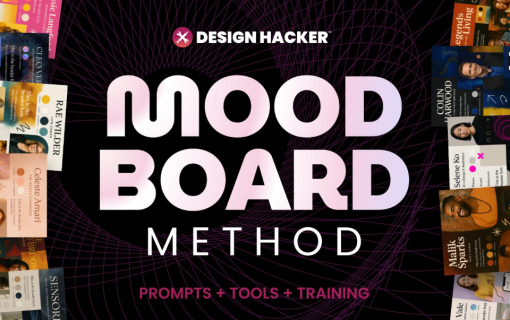

Andrew Lane – Mood Board Method: Build a Visual Brand Before You Start Designing
A business can have a great product, a useful service, and plenty of ideas, but still struggle to look consistent. One social media graphic has one style, the website has another, and the next marketing campaign seems to belong to a completely different brand.
That disconnect often starts with one missing piece: a clear visual direction.
Andrew Lane’s Mood Board Method is designed to help solve that problem. Rather than jumping straight into individual graphics or choosing colors simply because they look attractive, the course introduces a process for defining what a brand should look and feel like before producing its visual content.
The training combines branding concepts with AI-assisted creative tools. Its central workflow takes you from a written understanding of your brand to a mood board, then from that mood board to a set of visual guidelines that can be reused across different projects.
For entrepreneurs, designers, freelancers, and creators who want a more organized approach to branding, this is a useful subject to explore.
The idea behind the method: get the direction right first
Think about starting a new brand. You might already know the audience you want to reach and the type of product you want to sell. You may even have a few websites, photographs, color combinations, or design examples saved for inspiration.
But how do those separate references fit together?
Which colors should lead the design? Should the photography feel minimal, warm, bold, editorial, or playful? What kind of typography supports the personality of the business? And how can you make sure the next batch of content follows the same visual language?
These are the kinds of decisions that a mood board can help organize.
The Mood Board Method approaches this as a repeatable process instead of an isolated design exercise. Andrew Lane’s official course information presents a three-step system: define the brand vibe, generate a mood board, and create visual brand guidelines. It also includes a workflow for organizing those assets inside ChatGPT.
What the course covers
1. Defining the brand vibe
The first part focuses on understanding the identity behind the business or project.
A brand is more than a logo or a color palette. It also has a personality, an audience, an emotional tone, and a particular way of communicating. If those qualities are unclear, it becomes difficult to create visuals that feel connected.
The course introduces a Brand Vibe Report tool designed to help translate a brand idea into a written description. According to the official course page, the tool can work from a short description, a sentence, notes, or longer source material.
This stage gives you a starting point for creative decisions. Instead of asking an AI tool to make something that simply looks professional, you can give it a clearer picture of the brand’s intended personality and visual direction.
2. Generating the mood board
Once the brand direction has been defined, the next step is to turn those ideas into a visual reference.
The mood board generator is presented as a training-and-prompt workflow. It uses the brand information and visual inspiration to produce a board that can include elements such as:
- Color palettes and combinations
- Typography direction
- Photography and image styles
- Textures and visual details
- Design references and sample mockups
- Overall brand atmosphere
The purpose is not simply to create an attractive collage. It is to give the business a visual reference that can guide future design work.
You can use the resulting board to compare creative directions, identify what feels appropriate, and make more deliberate decisions before moving into individual assets.
3. Turning the mood board into visual brand guidelines
A mood board is useful, but it becomes much more valuable when its ideas are documented.
The third step focuses on converting the visual references into guidelines. The official course describes a tool that reads the mood board and helps explain how to use its colors, fonts, textures, layouts, and photography style.
This creates a reference that can be shared with a designer, used when preparing marketing material, or revisited when working on a new project.
For example, if you are preparing a landing page several weeks after creating your original mood board, you do not need to start your visual decisions from scratch. You can refer to the same guidelines and use them to keep the design connected to the original brand direction.
AI tools and creative resources
One of the interesting parts of this program is its focus on using AI as a creative assistant rather than treating it as a replacement for every design decision.
The official course page lists video tutorials, custom GPT tools, prompts, and additional creative resources. It also describes a ChatGPT optimization workflow that lets you organize your brand materials in a custom ChatGPT Project.
The intended benefit is straightforward: once your brand information and visual guidelines are organized, you can reuse them when developing new ideas or producing content.
The official page also lists several prompt-based resources:
Mood Board Prompt Library
A collection of 30+ prompts intended to help create branded visual concepts and mockups.
Scene Generator Prompt Library
Additional prompts for generating scenes and visual environments that fit a brand’s direction.
Style Transfer Prompt Library
Prompts designed to help explore or adapt visual styles for creative work.
Gamma AI and ChatGPT resources
The course page describes a Brand Image Style Tool and prompt collections for backgrounds, branded stock photography, accent elements, marketing mockups, product concepts, and other visual applications.
Nano Banana GPT tools
The official page also lists scene-generation and style-transfer resources associated with its AI image workflow.
The exact availability and compatibility of these resources can depend on the tools and AI services being used. AI platforms change, so it is sensible to check the current course materials and tool requirements before relying on a particular feature.
More than a mood board: applying the visual direction
The real value of a visual identity system comes from using it consistently.
Consider a small online business preparing a new product launch. It may need a landing page, product mockups, email graphics, social media posts, and promotional images. Without a clear visual reference, each asset can end up looking slightly different.
A mood board and written brand guidelines provide a shared starting point.
The same approach can be useful in several situations:
For a new business: Establish a visual direction before investing time in a full set of brand assets.
For an existing brand: Revisit an inconsistent visual identity and create a clearer reference for future work.
For freelancers: Use a visual framework to explain creative direction to clients before moving into detailed design production.
For content creators: Keep thumbnails, social posts, promotional graphics, and other content visually connected.
For agencies and creative teams: Give collaborators a reference that makes it easier to understand the intended style of a project.
These are practical applications of the subject matter, not guaranteed business outcomes.
Who may find this course useful?
The Mood Board Method is relevant to people who work with visual communication but do not always have a structured branding process.
- Graphic and brand designers: Explore a repeatable approach to visual direction and client presentations.
- Web designers: Establish the look and feel of a website before building individual pages.
- Freelancers: Create a clearer process for discussing brand direction with clients.
- Entrepreneurs: Develop a visual foundation for a new business, product, or service.
- Coaches and consultants: Create a more consistent appearance across websites, social platforms, and sales materials.
- Content creators: Build a recognizable visual style for ongoing content production.
You do not need to approach the material as an experienced brand strategist to understand the basic workflow. However, some familiarity with design concepts and AI tools may make it easier to adapt the process to your own projects.
What makes the approach interesting?
The strongest part of the method is the connection between three activities that are often handled separately.
First, you define the brand in words. Then you explore that direction visually. Finally, you document the decisions so they can be reused.
That sequence matters because generating attractive images is not the same as creating a consistent brand identity. A business might produce dozens of impressive AI visuals and still lack a recognizable style if there is no common direction behind them.
By connecting the written brand description, mood board, and visual guidelines, the course aims to make those pieces work together.
Another useful aspect is the emphasis on reusable resources. Rather than treating every new visual as a completely separate task, the workflow encourages you to keep your brand information available for future creative work.
What to keep in mind before enrolling
AI-assisted branding can make early creative exploration easier, but it does not remove the need for judgment.
Generated images may contain inconsistencies, inaccurate details, or design elements that need editing. A mood board should be reviewed against the actual business, its audience, and its positioning. Likewise, visual guidelines should be treated as a working reference rather than an unchangeable set of rules.
It is also worth checking which AI services are required and whether any of them involve separate subscriptions or usage limits. The availability of custom GPT tools and third-party AI features can depend on the relevant platform and account access.
The official sales page advertises instant access and lifetime updates, while its satisfaction policy states that refunds are not available because the product provides immediate access to digital resources. Buyers should read the current official terms before purchasing.
Final thoughts
Andrew Lane’s Mood Board Method takes a focused approach to an important part of branding: deciding how a business should look before producing a large amount of creative material.
Its main workflow moves from brand personality to mood board creation and then to written visual guidelines. The additional AI prompts, custom tools, and ChatGPT workflow are intended to make that visual direction easier to reuse.
This course may be worth considering if you regularly create brand visuals, work with clients, launch products, or manage content across several platforms and want a more organized starting point.
It is best viewed as training in AI-assisted visual branding and creative direction, rather than a promise of instant business growth or professional design results. The quality of the final work will still depend on the decisions, revisions, and creative judgment you bring to the process.

Reviews
There are no reviews yet.