
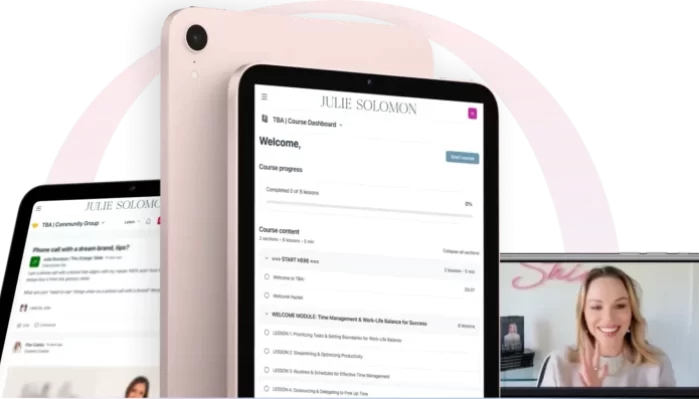

The Brand Accelerator by Julie Solomon: Build a Brand People Can Recognize, Understand, and Remember
A business can have a good offer, useful content, and plenty of experience behind it—and still struggle to explain why someone should choose it.
Sometimes the problem isn’t a lack of ideas. It’s that the message hasn’t caught up with the value of the business.
That’s the challenge at the center of The Brand Accelerator, a personal branding and messaging program created by Julie Solomon. Its focus is on helping entrepreneurs and creators become more intentional about how they present their expertise, connect with an audience, and communicate the value of their work.
This isn’t simply a lesson in making a social media profile look polished. The program approaches branding as a business decision: what you want to be known for, who you want to reach, what makes your perspective distinctive, and how those ideas should come through in your content.
Start with the part of your brand people don’t see
Before choosing a content format or planning another month of posts, it’s worth asking a more fundamental question:
What do you want people to associate with your name?
A personal brand becomes easier to recognize when its message has direction. Without that foundation, a creator might publish regularly but still leave potential customers unsure about what they do, who they help, or why their offer matters.
The Brand Accelerator places considerable emphasis on discovering and communicating that distinctive value. Its approach encourages participants to look beyond broad industry labels and identify the particular strengths, experience, perspective, and specialization they bring to their market.
That work can help shape a more consistent brand narrative. Instead of trying to appeal to everybody, the goal is to communicate with greater relevance to the people most likely to value the business.
The message behind the business
A useful way to think about brand messaging is to imagine someone landing on your website or social media page for the first time.
They should be able to understand:
- What you do and the people you serve.
- Which problem, need, or desire your work addresses.
- What makes your approach different.
- Why your experience or perspective is relevant.
- What they can do next if they want to work with you.
The program introduces Julie Solomon’s messaging approach, including the Magnetize & Monetize Method and brand-specialization concepts featured in her official program materials.
The purpose is to make communication more intentional. A business owner can have an excellent service, but if the message is too vague, overly broad, or difficult to remember, the right audience may not recognize its relevance.
A clearer message gives your content a stronger foundation.
Finding the people your brand is meant to reach
Not every follower is a potential customer, and a large audience does not automatically translate into a healthy business.
That’s why audience understanding is an important part of the program’s subject matter. Rather than creating content around whatever happens to be trending, participants are encouraged to consider the needs, questions, interests, and motivations of the people they want to reach.
This means looking at the audience from more than one angle:
Their situation: What are they trying to improve, change, or understand?
Their priorities: What matters most when they’re deciding whether to invest in a solution?
Their language: How do they describe the problem in their own words?
Their expectations: What would make an offer feel relevant and trustworthy?
These questions can inform everything from website copy and social media captions to podcast topics, email campaigns, and sales conversations.
The benefit of this exercise is practical: content becomes less about broadcasting information and more about communicating something that matters to a clearly defined group of people.
Turn expertise into a recognizable content style
Once the brand message is clearer, the next challenge is expressing it consistently.
A content strategy should do more than fill a publishing calendar. It should reinforce what the brand stands for, demonstrate expertise, and give the audience useful reasons to keep paying attention.
The Brand Accelerator materials cover content planning and organization, sustainable content strategy, and methods for refining content over time. The wider program positioning also emphasizes signature content frameworks designed to help creators communicate their specialization.
For a service provider, this might mean publishing practical advice that demonstrates how they approach client problems. A coach could use educational posts to explain a particular method or point of view. A creator might develop recurring themes that make their content easier for an audience to recognize.
The objective isn’t to copy someone else’s posting schedule. It’s to develop a content direction that fits the business and can be maintained without making constant publishing the entire job.
Give your social presence a clearer purpose
Social media visibility can be useful, but attention alone is not a complete marketing strategy.
A recognizable brand needs a reason for people to engage beyond a single post. The program’s social media topics include attracting and engaging followers and building a loyal community.
That can involve thinking carefully about the relationship between different types of content:
- Educational content that answers meaningful questions.
- Perspective-led posts that communicate the brand’s point of view.
- Stories and examples that make the business feel more personal.
- Content that explains the value of a service or product.
- Invitations that give interested people a clear next step.
A stronger social presence is not necessarily the one that publishes the most. It is the one where the message, audience, and business offer make sense together.
Connect brand visibility with the offers you sell
A personal brand should not exist separately from the business it represents.
The curriculum listing on Julie Solomon’s Brand Accelerator community page includes a section titled Next Steps: Elite Sales System. Its listed lessons cover business ecosystems, low-, mid-, and high-ticket offers, evergreen versus live-launch strategies, and the relationship between group coaching and courses.
These topics help connect brand communication with the commercial side of an online business.
For example, a creator may attract an audience through free educational content, build a relationship through an email list, and then introduce a paid product or service that addresses a more specific need. A consultant may use their content to demonstrate expertise before inviting qualified prospects to discuss a service.
The important distinction is that visibility and sales are related, but they are not identical. A content strategy can support a sales process; it cannot guarantee that every viewer will become a customer.
A look at the learning areas
The following topics reflect the curriculum and program descriptions available in public listings. Exact lesson availability can depend on the version of the program.
Brand discovery and specialization
Explore the foundations of personal branding, audience understanding, and identifying the qualities that distinguish your business from competitors.
Brand messaging and positioning
Work on communicating your unique value, developing a more focused brand narrative, and making your message easier for the right audience to understand.
Content strategy and planning
Study approaches to developing a sustainable content direction, organizing ideas, planning publications, and reviewing what is working.
Social media engagement
Explore ways to attract relevant followers, encourage interaction, and build a community around a recognizable brand message.
Offer and monetization strategy
Review the relationship between different offer levels, business models, evergreen promotions, launches, and educational products.
Additional resources
Older official program descriptions mention supporting materials such as worksheets, templates, swipe files, guides, a private community, and group coaching calls. These should be confirmed against the exact edition being sold rather than assumed to accompany every copy.
Who may benefit from this program?
The Brand Accelerator is most relevant to people who have something valuable to offer but want to communicate it more effectively.
It may suit:
- Coaches and consultants refining their positioning.
- Online entrepreneurs building a personal brand around their expertise.
- Content creators who want a more consistent message.
- Service providers who need their content to explain their value.
- Course creators developing a stronger connection between audience and offers.
- Established business owners whose branding no longer reflects the direction of their business.
It may be less suitable for someone looking for a beginner’s introduction to every aspect of digital marketing, a technical social media advertising course, or a guaranteed shortcut to followers and sales. Its central subject is brand strategy and messaging.
What makes the approach useful?
One of the strongest ideas behind The Brand Accelerator is that content becomes more effective when it has a clear strategic foundation.
Without positioning, a business can end up producing disconnected posts, changing its message too frequently, or imitating competitors without developing a recognizable identity. Working on the underlying message gives those activities a more consistent direction.
The program also connects branding with business offers. That matters because a personal brand is not just a creative project; for many entrepreneurs, it is part of how customers discover, evaluate, and decide to purchase from a business.
Still, the frameworks need to be applied to the realities of an individual market. A messaging formula cannot replace customer research, a strong offer, reliable delivery, or genuine relationships with an audience.
A practical way to approach the material
Rather than trying to change every part of a brand at once, participants can use the subject areas as a sequence of business decisions.
Begin by writing down what the business currently sells and who it serves. Next, identify the specific experience or approach that makes the offer distinctive. Use that information to refine the brand message, then review the website, social profiles, and content themes for consistency.
From there, build a manageable content plan around the questions the intended audience actually asks. Finally, check whether the content gives interested people a natural route toward learning more about the offer.
This process takes thought and testing. Messaging often improves through customer conversations, feedback, and observing which ideas create meaningful engagement—not simply by completing a worksheet.
Final thoughts
Julie Solomon’s The Brand Accelerator is centered on an important part of growing an online business: making sure the message behind the brand is as clear and distinctive as the work itself.
Its combination of personal brand discovery, messaging, content strategy, social media engagement, and offer-related topics makes it relevant to entrepreneurs who want a more connected approach to visibility and marketing.
The biggest value is likely to come from putting the frameworks into practice—reviewing how the business is positioned, making its value easier to understand, and creating content that supports a coherent customer journey.
For creators and established service providers who feel their current message is too broad or no longer represents the business they’ve built, this program offers a structured area of study to explore.

Reviews
There are no reviews yet.