
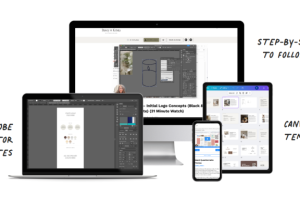

Davey & Krista – Design Strategy School
Good design is more than choosing the right fonts, colors, and images. It starts with understanding the business behind the brand, making purposeful creative decisions, and knowing how to guide a client from the first conversation to the finished website.
Davey & Krista’s Design Strategy School is a training program for aspiring and established designers who want to develop a more structured approach to brand identity, website design, and running a creative business. Instead of treating every project as a separate experiment, the course presents a repeatable framework for planning design work, explaining creative decisions, organizing client projects, and building a professional service offering.
The program is designed for people who want to create more than attractive visuals. It also addresses the practical work that supports a design studio: developing offers, setting prices, finding clients, managing projects, presenting concepts, and delivering finished work. These business skills can matter just as much as creative ability when you’re trying to turn design into a sustainable service.
Whether you’re exploring freelance design for the first time or looking to improve an existing studio, Design Strategy School brings creative fundamentals and business processes together in one learning experience.
What Is Design Strategy School?
Design Strategy School is a brand and website design training program created by Davey & Krista. Its stated focus is helping designers build a strategy-led design business with a clearer process for both the creative work and the client experience.
The official course outline describes training in design principles, brand and logo design, website customization, marketing, portfolio projects, and business operations. It also addresses the systems designers use to price services, communicate with clients, and manage projects.
This combination makes the program relevant to people who want to understand how the pieces of a design business fit together. A strong portfolio may help attract attention, but a clear offer, professional proposal, organized workflow, and thoughtful presentation can also influence how clients experience a project.
Rather than relying entirely on trends or copying designs that are popular at the moment, the course emphasizes understanding the reasoning behind design decisions. That foundation can help designers develop work that fits a client’s identity, audience, and goals.
Learn to Make More Intentional Design Decisions
Designers often know when something looks right but may find it difficult to explain exactly why it works. Developing a stronger understanding of design fundamentals can make that process more deliberate.
Design Strategy School includes material on the principles and elements of design, with topics such as color, typography, layout, composition, hierarchy, and spacing. These are foundational skills that influence how people read, understand, and respond to visual content.
Design Principles and Visual Structure
A design needs more than individual elements that look attractive on their own. Those elements must work together.
Understanding composition, visual hierarchy, and spacing can help you guide attention toward the most important information. A clear layout may make a brand identity easier to recognize, a website easier to navigate, and a presentation easier to follow.
Learning to assess these choices can also help you explain your decisions to clients. Instead of saying that a particular layout simply looks better, you can discuss its structure, readability, visual balance, and relationship to the project’s goals.
Color and Typography
Color and typography influence the personality and clarity of a brand. A thoughtful palette can support the intended mood of a business, while an appropriate type system can improve readability and create consistency across different materials.
The course’s advertised design fundamentals provide a starting point for learning how these elements work together. Designers can apply those principles when developing logos, brand assets, website pages, and other visual materials.
The objective is not to follow a universal formula for every client. It’s to understand the available choices and use them with a reason.
Develop a More Complete Brand Identity Process
Brand identity design involves much more than creating a logo. It can include understanding a client’s business, exploring possible creative directions, selecting typography and colors, developing supporting assets, and preparing files for practical use.
Design Strategy School includes a brand and logo design component intended to help students approach this work in a more organized way. The course describes a process for developing concepts, presenting creative work, refining a direction, and delivering brand assets.
A repeatable process can be useful when a client has several opinions, isn’t sure what they want, or needs help understanding the difference between an initial idea and a complete identity system.
From Initial Direction to Final Delivery
A structured brand project can involve several stages:
- Gathering information about the client’s business and audience.
- Identifying the project’s goals and visual direction.
- Exploring concepts and creating initial design options.
- Presenting the work and explaining the reasoning behind it.
- Refining the selected direction within the agreed project scope.
- Preparing final files and supporting brand materials.
These points describe the general stages of a brand identity project, not a guarantee that every step appears in precisely this order in every course lesson. Review the official curriculum to confirm the specific lessons and resources included in the current enrollment.
Having a defined process can help designers manage expectations and reduce confusion about what happens next. It also creates a clearer framework for communicating timelines, revisions, and deliverables.
Build Websites With Strategy in Mind
A brand’s website is often where visual identity and business objectives meet. The site needs to communicate what the business offers, help visitors find relevant information, and make the next step clear.
Design Strategy School includes training related to website design and Showit website customization. Showit is a visual website builder that allows users to create and customize pages without requiring traditional coding for many common design tasks.
For designers working with creative professionals and service-based businesses, website projects can involve more than making a page look polished. They may also require organizing content, considering the visitor’s journey, maintaining visual consistency, and preparing the site for launch.
Create a More Organized Website Workflow
A website project can become difficult to manage when the designer and client do not have a clear plan. Content may arrive late, feedback can become scattered, and small changes may extend the timeline.
A defined workflow helps set expectations from the beginning. Depending on the project, this might involve collecting content, confirming the site’s structure, developing page layouts, reviewing the design, implementing approved changes, and checking the finished site before launch.
The goal is to make the process easier to understand for both the designer and the client.
The course’s website-related material is especially relevant to designers who want to expand beyond logo work and offer a broader brand-and-website service. Before purchasing, check the official course page for the current software requirements and the specific website lessons included.
Understand the Business Side of Design
Creative skills are only one part of operating a freelance design business. You also need to decide what services to offer, how to communicate their value, how to price projects, and how to manage work from inquiry to delivery.
Design Strategy School includes a business-focused component covering topics such as pricing, workflows, client systems, and positioning your website to support your services.
This material may be useful if your current process feels improvised or if you’re unsure how to turn your skills into a clearly defined offer.
Pricing Your Services More Thoughtfully
Pricing can be difficult when you’re starting out. It’s tempting to base a fee entirely on how long you think a task will take or on what another designer charges.
A more considered approach begins with understanding the scope of the project, the work involved, the level of expertise required, the client’s needs, and the costs of running your business.
A clear offer should also explain what the client receives. For example, a brand identity package and a full brand-and-website package may require different timelines, deliverables, and levels of involvement.
Training can provide a framework for making these decisions, but no course can guarantee that clients will accept a particular price. Your rates will still depend on your experience, positioning, portfolio, market, and ability to communicate the value of your services.
Improve Your Client Experience
The client experience includes every interaction surrounding the design itself: the first inquiry, discovery conversation, proposal, onboarding, project updates, feedback process, and final handoff.
When these stages are organized, clients have a clearer idea of what to expect and what they need to do. Designers can also spend less time answering repeated questions or trying to recover information from scattered messages.
A professional process does not have to be complicated. It needs to be understandable, consistent, and appropriate for the size of the business.
For freelancers who want to build a more reliable way of working, the business systems covered in Design Strategy School may be as important as the creative lessons.
Learn to Market Your Design Services
Creating strong work is valuable, but potential clients still need a way to discover you.
Marketing for designers can involve a combination of portfolio development, website content, referrals, email marketing, social platforms, search visibility, and direct relationship-building. The most suitable mix depends on the kind of clients you want to reach and the way you prefer to run your business.
Design Strategy School includes a marketing component aimed at helping designers build visibility and attract potential clients. Its advertised topics also connect marketing with the broader process of running a design studio.
Build a Portfolio That Communicates Your Value
A portfolio is more useful when it explains the thinking behind the finished work rather than displaying visuals without context.
For each project, consider explaining the type of client, the challenge, the direction you explored, and how the final design addresses the brief. Where possible, show how the brand identity and website work together.
If you’re new to design, you may not yet have many paid projects to feature. Practice projects can help demonstrate your skills, provided you clearly identify them as concept work rather than presenting them as client commissions.
A portfolio built around the services you want to sell can also help potential clients understand whether your work fits their needs.
Choose Marketing Activities You Can Maintain
It’s easy to feel pressured to post on every platform, publish constantly, and try every marketing tactic. But an approach that is too demanding may be difficult to maintain alongside client work.
A more practical starting point is to identify where your ideal clients look for designers and choose a manageable set of activities. You might focus on improving your portfolio, publishing useful website content, nurturing professional relationships, or maintaining an email list.
The purpose is to develop a repeatable marketing routine rather than depend entirely on occasional bursts of activity.
Practice Through Portfolio Projects
Learning design principles is one thing; applying them to a realistic brief is another.
Design Strategy School advertises portfolio-building projects intended to give students opportunities to work through design scenarios and develop examples of their work.
Practice projects can help you explore different creative directions, improve your decision-making, and become more comfortable presenting a finished concept. They can also reveal areas that need further work before you take on a similar paid assignment.
Use portfolio projects to show your process as well as the result. A potential client may want to see how you approach a problem, organize information, and explain the thinking behind your choices.
If you publish practice work, label it accurately. Clear presentation builds trust and helps prospective clients understand the kind of work you’ve actually completed.
Who Is Design Strategy School For?
This program may be worth exploring if you’re looking for a structured way to develop both your design skills and the business processes surrounding client work.
New designers may appreciate a guided introduction to design fundamentals, brand identity, website work, and the practical steps involved in starting a service business.
Freelance graphic designers may find the brand strategy and client workflow topics relevant if they want to move beyond isolated design tasks and offer more complete services.
Website designers may be interested in the relationship between brand identity, Showit website customization, client communication, and website delivery.
Established creative professionals may use the program to review their existing process, improve how they present design decisions, and organize pricing, marketing, or project management.
Designers who want to build a studio may value the combination of creative training and business education, especially if they want to develop a repeatable way to deliver projects.
The best fit depends on your goals and current skill level. Someone who only wants to learn a single software feature may prefer a more specialized tutorial, while someone looking for a broader brand-and-website design framework may find this type of program more relevant.
What to Consider Before Buying
Before purchasing Design Strategy School, take a few minutes to compare the course with your needs.
Review the curriculum. Confirm that the lessons cover the design and business topics you want to learn. The official course page is the best source for the current module list.
Check the tools required. The program discusses Showit and design workflows. Make sure you understand which software, subscriptions, or accounts you’ll need and whether their costs are separate from the course.
Consider your available time. A broad training program is most useful when you can apply the lessons to practice projects or your own business. Think about how much time you can realistically dedicate to it.
Verify the current price and payment options. Prices and promotional terms can change. Confirm the total cost on the official checkout page before paying.
Read the refund terms. Review the current guarantee, eligibility requirements, and refund window directly with the provider. Don’t rely on outdated promotional material.
Confirm exactly what is included. Check whether the current enrollment includes templates, worksheets, bonuses, community access, or other resources, and review any terms attached to those items.
The course may provide useful direction, but your results will still depend on how consistently you practice, the quality of your work, your business decisions, and the needs of your market.
Is Design Strategy School Worth Considering?
Design Strategy School is worth considering for people who want to connect design fundamentals with the practical work of running a brand-and-website design business.
Its main appeal is the breadth of the advertised curriculum. Rather than focusing only on a design tool or a single creative technique, the program brings together visual principles, brand identity, website customization, portfolio development, marketing, pricing, and client systems.
That broader perspective can be useful for designers who feel confident creating visuals but need a more organized way to plan projects, communicate with clients, and deliver their services.
However, it may not be the right choice for everyone. If you already have a strong design process and only need help with one specific tool, a focused course may be a better fit. Likewise, enrolling in a program is not a substitute for practicing your craft, building a portfolio, and learning how to work with real clients.
Final takeaway: Davey & Krista’s Design Strategy School is a brand-and-website design education option for creatives who want to develop their design thinking and build a more structured service business. Review the official curriculum, current price, software requirements, and refund terms before making your decision.
Official course page: https://daveyandkrista.com/design-school/



Reviews
There are no reviews yet.