
A Different Kind of Career Question: What Is Worth Building Your Life Around?
There is a particular kind of frustration that comes from doing everything you’re supposed to do and still feeling that something is missing.
You might have a job, a degree, a business idea, or a reasonably comfortable routine. From the outside, things may look fine. Yet the work doesn’t feel meaningful, your interests seem scattered, or you keep wondering whether you’re spending your time on the right things.
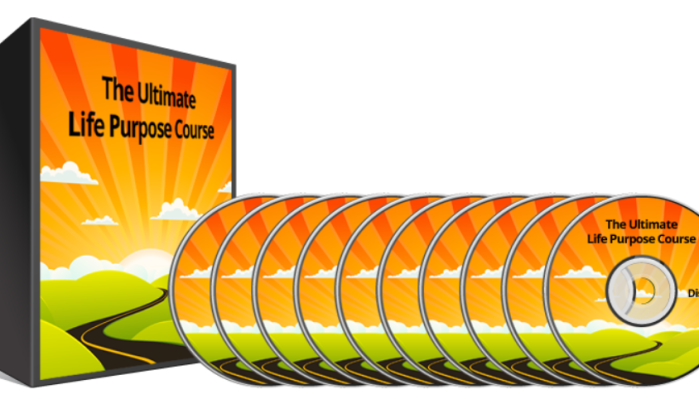
That is the territory explored in The Ultimate Life Purpose Course by Leo Gura.
Created by the founder of Actualized.org, this program approaches life purpose as something to investigate and develop rather than a magical answer waiting to appear. It asks learners to examine their values, strengths, motivations, fears, creative interests, and desired contribution before trying to turn those discoveries into a practical direction.
The course is extensive. Its official page advertises more than 25 hours of video across 90 lessons, alongside worksheets, guided visualizations, assessments, exercises, and a reading list. It is designed for people willing to do more than watch motivational videos and move on. The exercises are an important part of the process.
The starting point: Stop choosing your direction by default
Many career decisions are influenced by expectations that have never been questioned.
Family preferences, social status, financial pressure, educational choices, and the desire for approval can all shape what someone considers a successful life. Those influences are not automatically bad. Financial stability and practical responsibilities matter. The problem arises when a person follows a path without understanding whether it reflects their own priorities.
Leo Gura’s course encourages learners to examine these assumptions.
Its early lessons introduce ideas such as vision, responsibility, mastery, commitment, flow, intrinsic motivation, and contribution. These concepts provide a foundation for thinking about work as something more than a way to earn a living.
The goal is not to dismiss ordinary responsibilities or suggest that everyone should abandon their current career. It is to become more deliberate about the direction in which time, effort, and attention are being invested.
A closer look at the course’s central ideas
Rather than treating life purpose as a single decision, the curriculum breaks the subject into several areas of self-understanding.
Vision and the Hero’s Journey
The early material explores the role of vision and the idea of taking ownership of one’s direction. Lessons such as “The Power of Vision,” “Hero’s Journey,” and “100% Responsibility” introduce the broader mindset behind the course.
A vision gives a person something to work toward. It can also help make everyday decisions easier because there is a clearer connection between current actions and longer-term priorities.
Mastery, commitment, and flow
Other lessons examine mastery, the 10,000-hour rule, commitment, and flow. These topics encourage learners to consider what meaningful work actually requires.
Enjoying an activity is one thing; becoming skilled at it takes practice. A promising direction may involve years of learning, repetition, setbacks, and gradual improvement. The course asks learners to think beyond the initial excitement of a new interest.
Contribution and creative work
The curriculum also explores contribution, creative identity, finding a suitable medium, and developing a life calling.
This is an important distinction. A personal interest does not automatically become a meaningful career. Learners are encouraged to consider how their abilities and interests might translate into something useful to other people.
For someone interested in writing, that might mean publishing, teaching, or communicating ideas. For someone who enjoys building things, it could mean developing products, businesses, or practical solutions.
The specific answer will be different for every person.
The values assessment: Finding out what genuinely matters
One of the most substantial parts of the program is its values-assessment process.
People often describe their priorities using familiar words: freedom, family, achievement, creativity, security, learning, or service. But saying that something matters and actually organizing life around it are two different things.
The course includes a sequence of values exercises that asks learners to examine meaningful experiences, identify important values, define them, compare priorities, and consider whether certain values are positive or harmful to their direction.
The published lesson plan includes exercises covering:
- Identifying meaningful experiences.
- Exploring values through a structured assessment.
- Reviewing a master list of possible values.
- Examining toxic or conflicting values.
- Defining personal values more clearly.
- Rating and prioritizing values.
- Identifying negative themes.
- Making final adjustments to a personal values profile.
This process can be useful when someone feels pulled in several directions. For example, a person may say they want independence but repeatedly choose work environments that offer little autonomy. Another may value creative expression yet spend nearly all their time pursuing external approval.
Writing these contradictions down can make them easier to examine.
The assessment does not provide a scientifically guaranteed formula for discovering a perfect life purpose. It is a guided self-reflection process, and its usefulness depends on honest answers and thoughtful interpretation.
Strengths, interests, and your Zone of Genius
Knowing what matters is only part of the picture. A person also needs to consider what they are naturally drawn toward and what they can become particularly good at.
The course includes a strengths assessment and lessons on signature strengths, talent, and the concept of a “Zone of Genius.”
The general idea is to explore the intersection between personal ability, genuine interest, and meaningful contribution.
For instance, someone might enjoy explaining complicated subjects, have a talent for making information understandable, and care deeply about helping people learn. Those elements could point toward teaching, writing, consulting, or educational content.
Another person might be interested in design, problem-solving, and building useful products. Their direction could look very different.
The purpose of these exercises is to generate better questions about personal strengths and possible paths, not to assign everyone a fixed professional identity.
Turning a broad idea into a life-purpose statement
It is easy to say, “I want to help people,” “I want to be creative,” or “I want to make an impact.”
Those statements may express genuine intentions, but they are often too broad to guide daily decisions.
The course includes multiple life-purpose exercises, impact statements, examples, and a process for bringing the different pieces together.
Learners are encouraged to connect their strengths and interests with a form of contribution. This can help turn a general aspiration into a more concrete direction.
A person who enjoys research and explaining ideas, for example, might explore creating educational material for a particular audience. Someone who enjoys organizing people and solving operational problems might investigate entrepreneurship or leadership.
The important step is to move from an attractive phrase to something that can be explored, tested, and developed.
Working through fear and limiting beliefs
A person may have a reasonable idea of what they want to pursue and still avoid taking action.
Fear of failure, financial uncertainty, criticism, embarrassment, or disappointing other people can make a potential change feel much more difficult than it looks on paper.
The curriculum includes lessons on fear, comfort zones, resistance, limiting beliefs, and releasing fears. It also explores social conditioning and the influence of subconscious patterns.
These topics are intended to help learners recognize the internal obstacles that can interfere with long-term direction.
For example, someone may want to start a creative business but repeatedly postpone the first project because they believe their work must be perfect. Another person may avoid changing careers because they have attached their identity to a particular job title.
The exercises provide a way to examine those patterns and consider practical responses.
They should not be treated as a substitute for professional mental-health support when someone is dealing with serious psychological distress.
From self-discovery to an actual plan
Reflection is useful, but a life-purpose exercise that never changes anything outside a notebook has limited practical value.
The later part of the course moves toward implementation. The official lesson plan includes research, skill development, small bets, finding a niche, building habits, eliminating negative habits, and setting one-year goals.
This section matters because a possible career direction needs to be tested against reality.
Research can help someone understand an industry before making a major commitment. Skill development creates the ability to deliver useful work. Small experiments can reveal whether an idea is enjoyable and commercially viable without requiring an immediate life-changing decision.
For example, someone considering a move into design might complete a small project, speak with working designers, study the market, and build a portfolio before leaving an existing job.
That kind of gradual experimentation is often more practical than making a dramatic decision based only on temporary excitement.
What is included in the official course offer?
The Actualized.org sales page advertises the following components:
- More than 25 hours of video lessons.
- 90 individual HD video lessons.
- 35 or more core concepts.
- Worksheets and practical exercises.
- Values and strengths assessments.
- Guided visualizations.
- A life-purpose-specific reading list.
- Frequently asked questions and additional explanations.
- A 10-hour bonus audio collection.
- Lifetime upgrades as described in the original offer.
The official page describes streamed digital access rather than a physical DVD product. Its listed package and promotional terms should be checked directly with the provider because older sales-page details may not reflect the current checkout offer.
Who may find this course useful?
People considering a career change: The values, strengths, and vision exercises may help organize the questions involved in choosing a different professional direction.
Entrepreneurs: People building a business may want to examine whether their work reflects their deeper interests and priorities, rather than focusing only on growth or revenue.
Artists and creative professionals: The lessons on creative work, finding a medium, mastery, and contribution may provide a framework for thinking about a sustainable creative path.
Professionals feeling stuck: Someone who is comfortable on paper but dissatisfied with their daily work may benefit from structured reflection about what needs to change.
Students and younger adults: The course can introduce questions about values, strengths, habits, and long-term goals before major career decisions are made.
Personal-development learners: People who enjoy journaling, self-assessment, and examining their beliefs may appreciate the depth of the exercises.
A few things to understand before purchasing
This is a substantial self-development program, not a quick motivational challenge. Working through 90 lessons and completing the associated exercises takes time and attention.
It also has a particular philosophical approach. Some learners may appreciate its emphasis on personal responsibility, vision, and self-examination, while others may prefer a more conventional career-planning framework.
The course should be treated as one resource for reflection rather than an authority that can determine what someone ought to do with their life.
There are practical realities to consider, too. A meaningful career still needs to account for finances, responsibilities, market demand, available opportunities, and the skills required to do the work.
Finally, the original program is not independently verified as a newly created 2026 edition. If a seller advertises a 2026 package, check whether it contains the original lessons or any genuinely new material.
Final perspective
The Ultimate Life Purpose Course is built around a question that cannot be answered by a motivational quote: what kind of work and contribution would make your life feel more meaningful?
Leo Gura’s approach is to examine that question from several angles—values, strengths, motivation, creativity, fears, beliefs, and practical career development. The extensive assessment and exercise sections are a major part of the program, giving learners opportunities to work through their answers rather than simply listen to theory.
It is likely to appeal most to people who are ready to spend time examining their direction and testing ideas in the real world.
You do not need to emerge with a perfect five-year plan. A more realistic outcome is a clearer understanding of what matters, a few promising directions to investigate, and practical next steps that can be adjusted as you learn more.
Product information is based on the original creator’s published course page. This description does not claim personal completion, guarantee personal transformation, or promise career or financial results.


Reviews
There are no reviews yet.