

Vladimir Ivanov – SearchGAP Method: An SEO Field Guide to Finding Opportunities Other Websites Miss
A different way to approach keyword research
Most website owners know the routine.
Open a keyword research tool. Enter a topic. Look at the search volume. Check the keyword difficulty. Find a few phrases that seem achievable, write an article, publish it, and wait.
Then the waiting begins.
Sometimes the article gets impressions but very few clicks. Sometimes it sits beyond the first few pages. And sometimes a smaller website spends weeks producing content only to discover that the search results are already dominated by established brands.
This is the problem Vladimir Ivanov’s SearchGAP Method is designed to address.
Instead of treating SEO as a competition for the most attractive keywords, SearchGAP encourages a closer look at the actual search results. What are people searching for? What information is missing? Are the existing pages answering the question properly? Is there a topic that larger websites have overlooked?
The idea is simple, but useful: find an opportunity before investing time in creating the content.
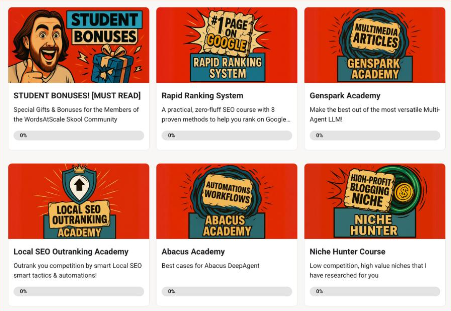
SearchGAP is presented as a broader SEO learning system rather than a single keyword-research trick. Its published offer includes multiple ranking methods, multimedia article templates, local SEO training, niche research resources, custom tools, and access to a private community.
The thinking behind SearchGAP
Traditional keyword research often begins with numbers: search volume, competition, keyword difficulty, and estimated traffic.
Those numbers can help, but they do not tell the entire story.
A keyword may have attractive search volume and still be a poor target. Perhaps the first page is filled with authoritative websites. Perhaps every result covers the same information. Or perhaps the search intent is different from what your planned article would provide.
SearchGAP takes a more opportunity-led approach.
The central question becomes:
Can your website publish something genuinely useful that addresses a gap in the current search results?
That might mean finding an unanswered question, covering a subject that competitors have treated superficially, or producing a richer page with useful images, comparisons, and other media.
This is especially relevant to newer websites that do not have the backlink profile or established authority of larger competitors.
It does not mean Google will automatically rank a new website. It means the research process is intended to help smaller publishers identify more realistic opportunities before committing to a content strategy.
Inside the method: what the training is designed to teach
<AsyncImage query=”SEO specialist analyzing Google search results keyword research laptop desk” aspectRatio=”16:9″ width=”100%”/>
1. Search for gaps, not just keywords
The main SearchGAP method revolves around discovering opportunities in Google’s search results.
Rather than choosing a phrase solely because a tool reports low keyword difficulty, the learner is encouraged to inspect the pages already ranking.
Consider a simple example.
Someone wants to publish an article about choosing an email marketing platform for a small business. The search results may already contain several comparison articles. But perhaps none of them explains pricing for very small lists, shows a clear feature comparison, or addresses a particular type of business.
Those missing elements could represent an opportunity to create a more useful resource.
The goal is not to manufacture a gap where none exists. It is to identify genuine weaknesses in the available information and decide whether your website can address them.
2. Work with newer and lower-authority websites
One of the main selling points of SearchGAP is its focus on fresh domains and websites with limited authority.
This is an interesting area for bloggers, affiliate marketers, and niche site owners. A new website often has fewer resources than established competitors. It may not be realistic to compete immediately for broad commercial keywords.
The SearchGAP approach encourages publishers to look for smaller, more specific opportunities where the existing results may not adequately serve the searcher.
The training promotes rapid rankings, including examples of pages reaching Google’s first page within 24–48 hours. These are creator-promoted case studies, not typical or guaranteed outcomes. Search performance depends on the query, competition, website, content quality, indexing, and Google’s systems.
3. Create multimedia articles instead of relying on plain text
<AsyncImage query=”professional SEO content creator designing multimedia blog article with images charts and comparison tables” aspectRatio=”16:9″ width=”100%”/>
Another important part of the program is its focus on multimedia content.
The official offer lists seven multimedia article templates. The underlying idea is to make pages more useful and engaging by combining written information with relevant visual and supporting elements.
Depending on the topic, a multimedia article might include:
- Original screenshots and demonstrations.
- Relevant product images.
- Comparison tables.
- Supporting graphics.
- Embedded video.
- Step-by-step explanations.
- Clear sections answering related questions.
This is more than a formatting exercise. A page should use media because it helps the reader understand something, not simply because it makes the article longer.
For example, a comparison of website-building tools may benefit from interface screenshots and a feature table. A local service guide might be clearer with original photographs and location-specific information.
The templates are intended to give users a repeatable starting point for creating this type of content.
4. Explore additional rapid-ranking methods
SearchGAP is not the only SEO technique included in the published membership.
The official website advertises eight rapid-ranking methods, including the main SearchGAP approach.
This gives members additional strategies to study rather than limiting the training to one keyword-research process.
For an SEO practitioner, the benefit of learning multiple approaches is the ability to compare them and decide which one fits a particular website or niche.
Not every method will be appropriate for every project. A local business website, an affiliate site, and a SaaS website have different audiences and commercial objectives.
The sensible approach is to understand the reasoning behind each method, test it on an appropriate project, and evaluate the results.
5. Local SEO Academy and rank-and-rent training
<AsyncImage query=”local business SEO Google Maps search results computer screen” aspectRatio=”16:9″ width=”100%”/>
The program also includes a Local SEO Academy focused on rank-and-rent strategies.
This is a separate business application of SEO.
The basic rank-and-rent model involves building a website around a local service or market, attracting relevant enquiries through organic search, and arranging a commercial relationship with a business that can handle those leads.
For example, a website might target a specific service in a particular city. If it attracts qualified enquiries, those leads may have value to a local service provider.
The training is relevant to people interested in local lead generation, SEO agencies, and building niche websites for local markets.
However, ranking a local website is only one part of the business model. Lead quality, business agreements, customer service, tracking, and compliance all matter. Revenue should never be assumed simply because a site begins receiving traffic.
6. Niche Hunter: finding markets worth researching
Sometimes the biggest challenge is not writing the content. It is deciding what website to build in the first place.
SearchGAP’s published offer includes a Niche Hunter course with more than 20 niche-discovery methods.
The purpose is to help learners explore markets and identify subjects that may offer worthwhile content opportunities.
This can be useful for someone starting an affiliate website or planning a new niche project. Instead of choosing a market entirely based on personal interest, they can investigate audience needs, available products, competition, and potential commercial applications.
A niche still needs more than low competition. It should have an identifiable audience and enough useful topics to support a sustainable website.
7. Custom SEO tools and research resources
The official membership also advertises custom tools for keyword research, gap detection, and content optimization.
These tools are positioned as a way to make repetitive research tasks more manageable.
For someone who works on several websites, having a more organized process for discovering topics and reviewing opportunities can be valuable.
The website advertises a combined tool value of more than $500 per month. That is a promotional valuation, not an independently verified market price or a guarantee of savings. Confirm exactly which tools are currently available and whether any usage limits apply.
The wider ecosystem: AI-assisted SEO and automation
<AsyncImage query=”AI SEO automation workflow laptop analytics keyword research dashboard” aspectRatio=”16:9″ width=”100%”/>
The SearchGAP community page also describes additional resources, including a Claude SEO Autopilot course and Pay Per Lead Ninja.
The Claude SEO Autopilot material is presented as a way to connect keyword research, content writing, publishing, and indexing into a more automated workflow using Claude.
Pay Per Lead Ninja extends the learning into local lead-generation business models.
These additions make the membership broader than a conventional SEO keyword course. They connect research and content production with automation and potential business applications.
Still, automation should be treated as assistance, not a replacement for editorial judgment. AI-generated pages need fact-checking, original value, appropriate editing, and quality control. Publishing large amounts of repetitive or unhelpful material is not a reliable SEO strategy.
The exact availability of these additional resources should be checked against the current membership tier.
What membership includes
According to the official SearchGAP website and community information, the advertised membership includes:
| Resource | Purpose |
|---|---|
| SearchGAP training | Finding underserved search opportunities |
| Eight rapid-ranking methods | Learning alternative ranking approaches |
| Seven multimedia article templates | Structuring richer content |
| Local SEO Academy | Exploring local SEO and rank-and-rent |
| Niche Hunter | Researching potential website markets |
| Custom SEO tools | Supporting keyword and content research |
| Private community | Sharing questions and implementation experiences |
| Direct instructor access | Asking Vlad questions and getting guidance |
The community page currently advertises a $27 monthly membership. Prices, access levels, and included resources can change, so buyers should confirm the live checkout terms. <Cite refs={[“turn936796search0″,”turn936796search2”]}/>
Who is likely to get the most from it?
SearchGAP is aimed at people who want to build or improve websites through organic search.
It may be especially relevant to:
Niche website owners: People building smaller websites around specific topics who need a more focused way to discover content opportunities.
Affiliate marketers: Publishers who depend on organic traffic and want to find less crowded search terms before creating product-focused content.
SEO freelancers and agencies: Professionals who want additional research methods and content workflows to test across client projects.
Local lead-generation builders: People interested in rank-and-rent websites and attracting enquiries for local service businesses.
SaaS founders and small businesses: Teams looking for ways to identify unanswered questions and improve their organic search visibility.
Complete beginners may also find the structured training useful, although they should be prepared to learn basic SEO concepts and put the methods into practice.
What I would keep realistic before joining
The most attention-grabbing part of the SearchGAP offer is the claim that websites can achieve first-page rankings within 24–48 hours.
It is worth approaching that claim carefully.
Some search terms are extremely underserved, and a useful page may gain visibility quickly. But no SEO course can guarantee that every article will rank within a fixed time. Google controls its own crawling, indexing, and ranking systems.
The official website also states in its FAQ that results are not guaranteed. Its results-based refund offer has conditions around proper implementation, so read the current refund policy rather than relying only on the headline promise. <Cite refs={[“turn936796search0″,”turn936796search1”]}/>
There are a few other things to consider:
- Content quality: A multimedia template does not automatically make an article useful.
- Search intent: A page needs to answer what people are actually looking for.
- Competition: Some niches remain difficult even when a keyword appears attractive.
- Indexing: Publishing a page does not guarantee immediate indexing.
- Tools: Check current access, limitations, and any additional software requirements.
- Membership terms: Confirm billing frequency, cancellation, and which resources are included.
Final verdict: a research-first approach to SEO
The most interesting thing about SearchGAP is its emphasis on choosing the opportunity before producing the article.
That is a practical habit for anyone working with organic search. Too many content projects begin with a keyword list and end with pages that repeat what everyone else has already published.
Vladimir Ivanov’s program encourages a different starting point: inspect the search results, look for missing information, assess whether your website can provide something better, and then build the content around that opportunity.
The additional training in multimedia articles, local SEO, niche research, automation, and custom tools gives the membership a wider scope than the core method alone.
For website owners, affiliate publishers, and SEO practitioners who want to experiment with opportunity-led keyword research, SearchGAP may be worth exploring. The strongest reason to consider it is the research framework and the collection of supporting resources—not the promise of instant rankings.
Frequently Asked Questions
1. What is Vladimir Ivanov’s SearchGAP Method?
SearchGAP is an SEO approach focused on finding underserved search opportunities and content gaps, then creating useful pages designed to address those opportunities.
2. What does the SearchGAP training cover?
The wider program advertises eight rapid-ranking methods, seven multimedia article templates, local SEO training, niche research, custom SEO tools, and community access.
3. Can SearchGAP help new websites rank?
The method is specifically promoted for fresh and low-authority websites. However, ranking speed depends on competition, content quality, search intent, indexing, and Google’s ranking systems. Results are not guaranteed.
4. Does the program include multimedia article templates?
Yes. The official offer advertises seven templates designed to help users create richer articles with relevant multimedia elements.
5. Is local SEO included?
Yes. The published membership includes a Local SEO Academy with rank-and-rent training.
6. Does SearchGAP include niche research training?
Yes. The official website lists a Niche Hunter course with more than 20 niche-discovery methods.
7. Are SEO tools included?
The official offer advertises custom tools for keyword research, gap detection, and content optimization. Confirm the current tool list and access limits before joining.
8. Does the membership include AI SEO training?
The community page also lists Claude SEO Autopilot training, which is presented as a workflow for keyword research, content creation, publishing, and indexing. Confirm the current membership inclusions.
9. How much does SearchGAP cost?
The official community page advertises a $27 monthly membership. Check the live checkout page for current pricing, annual options, and billing terms.



Reviews
There are no reviews yet.