
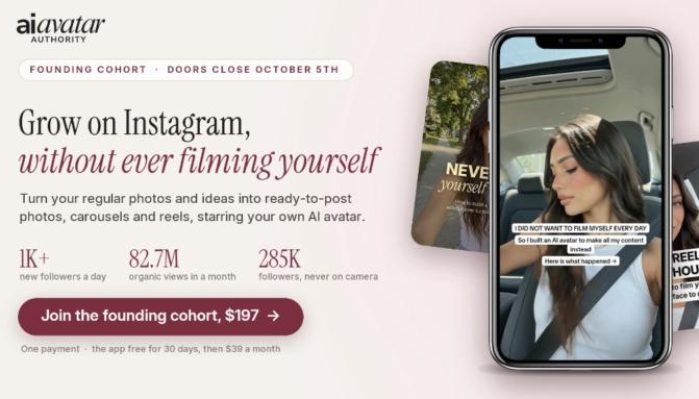

Lanie Lately – AI Avatar Authority 2026: Build a Recognizable Content Brand Without Being on Camera Every Day
There is a particular kind of pressure that comes with building a personal brand online: people expect you to show up consistently, but creating something worth posting takes time. You need ideas, visuals, captions, reels, and a recognizable style. And if you are not comfortable recording yourself, the process can feel even more demanding.
That is the problem behind Lanie Lately – AI Avatar Authority.
The central idea is to use an AI-generated avatar as the visual identity for a social media presence. Rather than relying on daily selfies or filmed talking-head videos, creators can develop a consistent digital persona and use AI-assisted tools to produce content around it.
The training is positioned for beginners who want guidance from the initial avatar setup through planning and publishing their first content. Its wider subject matter connects AI image creation with Instagram strategy, short-form content, brand positioning and audience communication.
It is not simply a lesson in generating a realistic AI portrait. The more useful question is what happens after the avatar exists: What should it represent? What should it post? How can its content feel consistent? And how can a creator use that identity to communicate something valuable to an audience?
The Starting Point: Create a Digital Face for Your Brand
The first step is establishing the avatar.
The program’s public descriptions explain that the avatar can be created using a small collection of ordinary reference photos rather than a professional photo shoot. One description specifies a starting range of five to fifteen photos. The idea is to create a recognizable digital character that can appear in different settings, outfits and content formats.
This can be appealing to people who want a visible online identity but do not want to be on camera all the time.
A consistent avatar also gives the creator a visual reference point. Instead of using unrelated stock images or changing the look of every post, the content can revolve around one recognizable character.
There is an important distinction, however: an AI avatar is not the same as a real person appearing in a photograph. It is a generated representation. Creators should be transparent about realistic AI-generated imagery and follow the disclosure requirements of the platforms where they publish.
From One Avatar to a Library of Content
An avatar becomes more useful when it can be placed into different content situations.
The AI Avatar Authority descriptions cover several content formats:
AI-generated photos: Create images of the avatar in different settings and visual styles. The app description emphasizes using a simple written instruction or a visual reference rather than requiring the user to build every image prompt from scratch.
Quote posts: Place a message or quote over an image. This format can be used for short observations, educational points, brand statements or conversation starters.
Instagram carousels: Develop multi-slide posts with a cover hook, supporting information and a closing call to action. The described workflow includes different carousel layouts and the ability to edit individual slides.
Short-form reels: Turn an idea, saved hook or existing clip into a short video. The public product description refers to on-screen hooks, captions and talking-style avatar clips.
These formats serve different purposes. A photo can establish a visual identity, a carousel can explain an idea in more depth, and a reel can deliver a short message in a more dynamic format.
The practical benefit is having several ways to communicate without needing to record a fresh video every time.
The Content Strategy Behind the Avatar
A good-looking avatar does not automatically create a strong personal brand.
People may notice an image, but they need a reason to keep following the account. That reason usually comes from the ideas, information, perspective and consistency behind the content.
The training’s advertised strategy material addresses this broader side of content creation. Publicly listed topics include profile positioning, hooks, content formats, consistency, audience trust and creating posts that support an offer.
One of the listed frameworks is the 4P Post Mix: Pull, Proof, Person and Path. It provides a useful way to think about the balance of a content calendar:
- Pull: Posts designed to attract attention from the right audience.
- Proof: Useful demonstrations, explanations or evidence that help establish credibility.
- Person: Content that communicates personality, perspective and brand identity.
- Path: Posts that help readers understand a relevant next step.
This is more useful than treating every post as a sales pitch. An account needs a mixture of content that attracts people, gives them a reason to trust the creator and makes the next step understandable.
The course descriptions also refer to hooks, audience awareness, profile presentation and calls to action. These topics matter whether the creator uses an AI avatar, a real camera or a combination of both.
A More Organized Instagram Routine
One of the challenges of social media is not always making a single post. It is deciding what to publish tomorrow, next week and after that.
AI Avatar Authority presents content planning as part of the workflow. Its public app description includes a content calendar, saved hooks, a library and planning features. The training descriptions also refer to a consistency system and a 30-day authority-building plan.
A structured month can help a creator move beyond posting whenever inspiration happens to appear.
For example, a simple weekly plan might include:
- A post that introduces a common problem in the audience’s niche.
- A carousel that explains a useful process or answers a recurring question.
- A reel that delivers one clear idea.
- A personal or brand-perspective post that makes the account feel more recognizable.
- A post that explains a relevant product, service or next step.
This is an illustrative planning approach, not a promise that a particular posting schedule will produce a specific result. The actual plan should reflect the audience, business model and available time.
The point is to give content creation a repeatable structure instead of starting from a blank screen every day.
Making Reels and Talking-Avatar Videos
Short-form video is a major part of the advertised workflow.
The public descriptions mention creating reels from saved hooks and clips, generating new reels, and producing short talking-avatar segments. Other listed material covers avatar animation and speech-related tools.
These formats can help creators experiment with different ways of presenting an idea. A talking avatar might introduce a topic, explain a simple concept or deliver a short message. A visual reel might use a generated scene with a hook and caption.
The quality of the result still depends on the message. A realistic face cannot compensate for an unclear opening, irrelevant information or a weak call to action.
It is also sensible to review generated videos before publishing. Check the avatar’s appearance, lip synchronization, wording, pronunciation, subtitles and any claims made in the content. AI-generated material can contain errors, and the account owner remains responsible for what gets posted.
Beyond Posting: Trust, Conversations and Offers
The wider course descriptions extend beyond making images and reels. They include topics related to audience trust, stories, direct-message conversations, affiliate promotion, building an offer and funnel planning.
That broader direction is important because content is often only the first step in a business relationship.
A useful post may introduce an idea. A story sequence may provide additional context. A conversation may help someone decide whether a service or product is relevant to them. An offer then gives interested followers a clear way to take the next step.
The material also references affiliate marketing and creating or selling an offer of your own. These subjects may be relevant to creators who want their content to support a business rather than simply collect views.
However, learning about these approaches does not guarantee customers, affiliate commissions or revenue. Results depend on the offer, audience fit, content quality, platform reach and the creator’s ability to deliver what they promote.
What the Publicly Listed Training Covers
Public course listings describe a broad curriculum that includes the following areas. Because the available lesson inventory comes from third-party course listings rather than a fully verified current official syllabus, treat this as a reported outline and confirm the exact contents of the package being purchased.
| Training area | Reported subject matter |
|---|---|
| Getting started | Welcome and AI avatar setup |
| App tutorials | Create screen, library, prompt builders, hooks, brand settings and calendar |
| Photos | Generate individual images and batches of avatar photos |
| Reels | Create reels from saved hooks, clips and new ideas |
| Carousels | Build multi-slide posts with different layouts |
| Quote posts | Add text and quotes to avatar images |
| Authority strategy | Profile positioning, hooks, trust and content formats |
| Consistency | Content routines and a 30-day planning approach |
| Content that sells | Posts, stories, reels and calls to action |
| Audience communication | Stories, direct messages and sales conversations |
| Monetization topics | Affiliate promotion, offer creation and funnel planning |
| Advanced creative tools | Avatar animation, speech and AI podcast workflows |
The public lesson inventory also names topics such as Google Flow, motion control, lip-sync tools, custom voice creation and AI podcast production. Tool availability and compatibility can change, so buyers should check which demonstrations and integrations remain current.
Frequently Asked Questions
1. What is Lanie Lately’s AI Avatar Authority?
AI Avatar Authority is an AI-avatar-focused content creation and social media training offer. It is designed to help creators establish an AI-generated persona and use it to produce Instagram-style photos, reels, carousels and other brand content.
2. Do I need to appear on camera?
The concept is designed for people who prefer not to film themselves regularly. An AI avatar can serve as the visual character in generated content. You should still review and take responsibility for everything published under your account.
3. Can I create an AI avatar using ordinary photos?
The public course descriptions explain an avatar setup process using approximately five to fifteen reference photos. Confirm the current setup requirements and supported image formats before starting.
4. Does the program cover Instagram reels?
Yes. Public descriptions list reel creation workflows, including reels made from saved hooks, existing clips and new ideas. Talking-avatar content is also mentioned.
5. Does it teach carousel creation?
Yes. The advertised content covers multi-slide Instagram carousels, including layouts that combine images and text. Some descriptions also mention editing individual slides and adding a closing call to action.
6. Is AI Avatar Authority suitable for beginners?
The offer is presented as beginner-friendly, with step-by-step avatar setup and app tutorials. People who are completely new to AI tools may still need time to understand the software and its settings.
7. Does the app automatically publish posts to Instagram?
The current official website says users generate and assemble their content, then download it and publish it themselves. It does not describe automatic Instagram posting in the current version.
8. Does the training include affiliate marketing?
Public course inventories list an Affiliate Launchpad section, along with topics about affiliate stories and direct-message conversations. The exact lessons included should be checked against the package being purchased.
9. Does AI Avatar Authority guarantee Instagram growth or sales?
No. Content tools and training cannot guarantee followers, leads, engagement, commissions or revenue. Results depend on the audience, content, offer, consistency and platform conditions.
Who May Find It Useful?
Camera-shy creators: People who want a visual social media identity but prefer not to record themselves regularly.
Coaches and consultants: Business owners who want a repeatable way to create educational posts, short videos and brand-led content.
Solo entrepreneurs: People managing their own social media who want help organizing the creative process.
Affiliate marketers: Creators interested in using an avatar-based identity to communicate product information and publish promotional content responsibly.
Beginner AI-content users: People who want a guided introduction to avatar images, reels, carousels and related content workflows.
It may be less suitable for someone who wants a fully autonomous social media manager that publishes everything without human review. The current official website states that users download the assembled content and publish it themselves; it does not describe automatic Instagram posting or built-in DM automation in the current version.
What to Check Before Purchasing
AI Avatar Authority has appeared in different forms across public listings: as a training offer, a community and an AI content-generation app. These should not be treated as interchangeable.
The current official website describes app access starting from $39 per month, with a free first photo and a stated seven-day refund policy subject to its usage condition. It also explains that the app generates and assembles content but does not publish it automatically. Pricing, limits and terms should be checked on the official site before checkout.
A separate Skool page describes a private community and a founding cohort. That page’s membership information may relate to an earlier cohort and should not be assumed to represent the current app subscription.
If you are buying a recorded-course package from a third-party seller, verify exactly what files are included. Do not assume it includes a working app account, a current subscription, private community access, direct messaging with Lanie, future updates or the right to redistribute the original materials.
Final Assessment
Lanie Lately’s AI Avatar Authority is built around a practical idea: use a consistent AI avatar to make social media content creation less dependent on being physically on camera.
Its appeal is the combination of visual content formats and brand-building topics. The advertised workflow reaches from avatar creation to photos, carousels, reels, content planning and audience communication. That gives the subject more depth than a tutorial focused only on generating an AI portrait.
The strongest reason to consider the program is if you want to explore an avatar-led Instagram presence and need guidance on turning that identity into a consistent content routine.
Go in with realistic expectations. An avatar can help create a recognizable visual style, but it cannot replace useful ideas, honest communication, audience understanding or a worthwhile offer. Nor does it guarantee follower growth, leads or sales.
Reviews
There are no reviews yet.