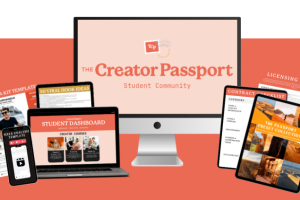

Giselle Langley – The Creator Passport
Your Content Deserves More Than a Spot in Someone’s Feed
You’ve probably had this experience: you spend time planning a post, finding the right location, filming a few clips, editing everything together, and finally hitting publish. Then you check your phone, hoping the content reaches the people you had in mind.
Sometimes it does. Sometimes it disappears into the feed.
For anyone trying to build a career as a content creator, that uncertainty can be frustrating. You might have plenty of ideas but struggle with filming. You might enjoy creating videos but have no clear plan for growing your audience. Or perhaps your social media accounts are gaining attention, yet you’re still unsure how to approach brands or turn your creative work into a business.
The Creator Passport by Giselle Langley is designed around the different skills involved in building a content creation business. Rather than focusing exclusively on follower growth, the advertised program combines visual content production, social media strategy, and business development.
The curriculum is organized into three main tracks: photography and videography, social media growth, and building a creator business. The goal is to help learners understand the creative work behind their content and the business decisions that can support its development.
For aspiring creators, that broader perspective matters. A strong online presence involves more than learning how to make one good video. It requires a combination of creative judgment, audience understanding, consistent execution, and the ability to communicate your value to potential partners.
Track One: Get More Comfortable Behind the Camera
You don’t need an expensive camera setup to begin creating content. A smartphone can be enough to start learning composition, lighting, framing, and storytelling.
But as your skills develop, you may want to understand why some photos look more polished than others, how camera settings affect the final result, and what makes video footage easier to edit.
The Creator Passport’s advertised photography and videography track addresses these creative foundations.
Understand the Basics of Photography
Good photography starts with learning how to make deliberate choices about what appears in the frame.
Lighting affects the mood of an image. Composition guides the viewer’s attention. Camera settings influence exposure, and the shooting environment can change how colors and textures appear.
Learning these fundamentals can help you make better decisions when creating product photos, travel content, lifestyle imagery, or visual material for a personal brand.
The objective is not simply to produce attractive pictures. It is to understand how to create images that suit the story you want to tell.
Make Better Use of the Equipment You Already Own
Many new creators assume they need to purchase more equipment before they can improve their content.
In reality, learning the equipment you already have can be a more useful first step.
Understanding your camera or phone settings, planning your shots, and working with available light can help you produce more consistent results without immediately investing in a large collection of gear.
The advertised curriculum includes camera equipment, manual photography, mobile photography, and preparation for shoots. These subjects are relevant to creators who want to develop their technical skills gradually.
Explore Video Production and Editing
Short-form video has become an important format for sharing ideas, showcasing products, and telling stories online.
Creating a finished video involves several stages: planning the shot, recording usable footage, selecting clips, arranging the sequence, editing the pacing, and preparing the final export.
A basic understanding of these steps can make the process less intimidating.
The program’s advertised videography content includes filming techniques, mobile video creation, drone-related topics, and editing workflows. Its listed resources also reference editing software such as Final Cut Pro, Lightroom, and Photoshop within the broader visual-production curriculum.
The exact software lessons and requirements should be confirmed against the current course outline before purchase.
Track Two: Develop a More Intentional Social Media Strategy
Creating better content is only part of the challenge. You also need to understand who you’re trying to reach and why they might care about what you publish.
This is where a social media strategy becomes useful.
Without a clear direction, content creation can turn into a cycle of posting whatever comes to mind and hoping something performs well. That approach may occasionally produce a successful post, but it can be difficult to repeat or learn from.
The Grow Like a Pro Blueprint is advertised as the program’s audience-development track, covering brand foundations, content planning, Instagram growth, TikTok growth, and analytics.
Give Your Personal Brand a Clear Identity
A personal brand is not just a logo, color palette, or carefully edited profile picture.
It also includes the subjects you talk about, the perspective you bring, the audience you serve, and the expectations people develop when they follow your work.
For example, two creators might both publish travel videos. One could focus on affordable weekend trips, while the other creates detailed visual guides for luxury destinations.
Their content might share a broad category, but their audiences, partnerships, and creative decisions could be very different.
A clearer brand identity helps you decide what to publish and makes it easier for potential followers to understand what they can expect from your account.
Build Content Around a Purpose
A content plan gives you a starting point when you’re deciding what to create next.
Instead of trying to invent a completely new idea every day, you can organize your work around a few recurring themes.
A travel creator might focus on destination guides, behind-the-scenes footage, photography tips, and practical travel advice. A beauty creator could build content around tutorials, product comparisons, routines, and personal experiences.
These themes make it easier to plan ahead while leaving room for new ideas.
The advertised Grow Like a Pro Blueprint includes content pillars, content strategy, and systems to establish before creating content. These subjects are relevant to anyone trying to move from occasional posting to a more organized publishing routine.
Understand Instagram and TikTok as Different Platforms
Although Instagram and TikTok both support short-form video, they offer different viewing experiences and content opportunities.
The same idea may need a different opening, editing style, caption, or presentation depending on the platform and the audience you want to reach.
A tutorial might work well as a concise video on one platform, while a more detailed explanation or a carousel could suit another format.
The point is not to create entirely separate identities for every channel. It is to understand how to present your ideas in ways that fit the platform and remain authentic to your brand.
The Creator Passport advertises training related to Instagram and TikTok growth, including content strategy and video creation. As with any social media education, individual results will vary, and platform algorithms can change.
Learn From Your Content Analytics
It can be tempting to judge every post by its view count. But a post that receives many views does not necessarily help you build the kind of audience or business you want.
Depending on the platform and your goals, other useful measurements might include watch time, audience retention, saves, shares, profile visits, link clicks, and meaningful inquiries.
For example, a tutorial with fewer views might attract people who are genuinely interested in your expertise. A more widely viewed entertainment post might introduce your account to a broader audience but generate little interest in your services.
Neither result is automatically better. It depends on what you’re trying to accomplish.
The advertised curriculum includes analytics as part of its social media growth training. Learning to interpret performance data can help you make more informed decisions about future content.
Track Three: Treat Content Creation Like a Business
This is the part of creator life that often gets less attention in the early stages.
You can learn to film, edit, and publish content without necessarily understanding how to manage a commercial relationship with a brand.
Once you start exploring paid opportunities, new questions appear.
How do you approach a company? What should you include in a pitch? How do you discuss pricing? What belongs in an agreement? And how do you keep track of the work you’re expected to deliver?
The Creator Passport’s advertised 6 Figure Fast Track focuses on the business side of content creation, including multiple income streams, pricing, brand pitching, negotiation, administration, and legal and tax considerations.
Understand the Different Ways Creators Can Earn
Content creators may earn money through several different channels, depending on their audience, skills, niche, and business model.
Possible routes include sponsored content, brand partnerships, user-generated content services, digital products, affiliate arrangements, and other creative or professional services.
Not every route will suit every creator.
A photographer might prefer licensing images or working directly with brands. A specialist educator could develop templates or instructional products. A lifestyle creator might pursue sponsored campaigns when the partnership fits their audience.
The important thing is to understand the options before assuming that follower growth alone will generate income.
The course advertises training on multiple income streams and creator-business development. The precise methods and examples included should be checked against the current curriculum.
Learn to Present Your Work to Brands
A brand partnership usually involves more than sending a message saying you would love to collaborate.
A professional pitch gives the company a reason to consider working with you. It can explain who you are, the audience you reach, the kind of content you create, and how your work may support the brand’s campaign.
A relevant pitch is generally more useful than a generic message sent to hundreds of companies.
For example, a creator who produces detailed outdoor travel guides might approach a company whose products naturally fit that audience. The pitch could explain the creative concept, the intended audience, and the proposed deliverables.
The objective is to make the potential collaboration easy to evaluate.
The advertised 6 Figure Fast Track includes pitching to brands, tourism boards, and hotels, along with negotiation training. These topics may be particularly relevant to travel and lifestyle creators who want to explore sponsored opportunities.
Approach Negotiation With More Confidence
When discussing a brand deal, creators need to understand what the proposed fee covers.
Deliverables, deadlines, usage rights, exclusivity, revisions, and payment terms can all affect the value and scope of a collaboration.
A campaign that includes several edited videos and extended advertising usage is different from one that requires a single organic social post.
Knowing how to ask questions about these details can help you evaluate an offer more carefully.
The advertised curriculum includes pricing, contracts, and negotiation-related topics. However, course participation should not be treated as a guarantee of brand partnerships or a substitute for qualified legal or tax advice when needed.
Keep the Business Side Organized
As creative work increases, so does the amount of administration involved.
You may need to track deadlines, manage project files, organize invoices, respond to brand emails, record expenses, and make sure agreed deliverables are completed.
Even a simple workflow can make these responsibilities easier to handle.
The aim is to create enough structure to support your creative work without allowing administration to consume every available hour.
The Creator Passport advertises content on business administration, task management, and creator-business foundations. These topics are relevant to anyone considering a more professional approach to their content work.
Who May Benefit From The Creator Passport?
The program may be worth exploring if you’re:
- An aspiring content creator who wants to build foundational photography, videography, and social media skills.
- An emerging influencer who wants to approach audience growth more strategically.
- A travel or lifestyle creator interested in improving visual storytelling and exploring relevant brand partnerships.
- A personal-brand entrepreneur who uses social media to share expertise and develop business opportunities.
- A freelancer or creative professional interested in pitching services and working with brands.
- An established creator who wants to review the business systems behind content production and monetization.
If you already have strong photography skills, for example, you may be more interested in the audience-growth or business-development sections. If you’re completely new to content creation, the visual-production lessons may be a more relevant starting point.
Review the course outline to see whether the level of instruction matches your experience.
What to Consider Before Enrolling
The Creator Passport covers several different areas of creator development, but a broad curriculum does not automatically mean every section will be equally relevant to you.
Before enrolling, consider your main goal.
Do you want to create better videos? Develop a clearer social media strategy? Learn how to pitch brands? Or organize the business side of your creative work?
Having a clear objective makes it easier to assess the course and decide which material deserves your attention first.
You should also verify the current program version, available lessons, support arrangements, access period, price, and refund terms with the official provider. Course versions and included resources may change.
Final Thoughts
Building a creator business involves more than finding a popular trend and hoping it takes off.
It requires creative skills, an understanding of your audience, a recognizable point of view, and a practical approach to the business opportunities that may follow.
Giselle Langley – The Creator Passport brings these areas together through its advertised photography and videography, social media growth, and creator-business tracks.
For people who want to take content creation more seriously, the program may offer a useful framework for evaluating the skills they need to develop. Its relevance will depend on your experience, your goals, and the exact materials included in the version available to you.
The most sensible approach is to treat the training as a learning resource, apply the concepts that fit your situation, and judge progress by the quality of your work and the results you can actually measure—not by promises of overnight growth or guaranteed creator income.
Frequently Asked Questions
1. What is The Creator Passport by Giselle Langley?
The Creator Passport is a training program for content creators. Its advertised curriculum combines photography and videography, social media growth, and business-development education.
2. What are the main sections of the course?
The program is advertised through three primary tracks: The Manual Photography & Videography Masterclass, Grow Like a Pro Blueprint, and The 6 Figure Fast Track.
3. Who is this course designed for?
It may be relevant to aspiring influencers, travel and lifestyle creators, social media entrepreneurs, and creative professionals who want to improve their content and understand the business side of working with brands.
4. Does The Creator Passport teach photography and video editing?
The advertised photography and videography track covers visual-production topics, including camera fundamentals, mobile photography, filming, and editing. Confirm the current curriculum for the exact software lessons and resources included.
5. Does the course cover Instagram and TikTok growth?
Yes. The advertised Grow Like a Pro Blueprint includes social media growth and content strategy topics related to Instagram and TikTok.
6. Does The Creator Passport teach brand pitching?
The advertised business track includes pitching to brands, tourism boards, and hotels, along with pricing and negotiation topics.
7. Can this course guarantee brand deals or six-figure income?
No. A training program cannot guarantee a specific income, audience size, or number of brand partnerships. Results depend on individual skills, market demand, content quality, and execution.
8. What is the current price of The Creator Passport?
Prices and enrollment offers can change. Check the official provider’s current page for the applicable price and payment terms.



Reviews
There are no reviews yet.