
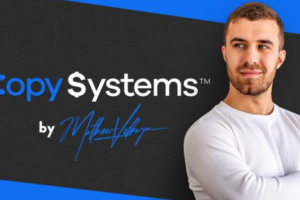

Matthew Volkwyn – Copy Systems (March 2026)
Good copywriting is about more than finding the right words. It starts with understanding the customer, identifying what makes an offer relevant, and communicating its value in a way that encourages people to take the next step. Matthew Volkwyn – Copy Systems (March 2026) is a copywriting and creative-strategy training program aimed at writers and marketers who want a more structured approach to persuasive marketing.
The program is positioned around practical systems for creating marketing messages across eCommerce and direct-to-consumer (DTC) businesses. Rather than treating every email, advertisement, or sales page as an entirely new project, a systems-based approach gives copywriters a repeatable process for researching audiences, developing angles, structuring messages, and refining their work.
For freelancers, in-house marketers, creative strategists, and business owners, this subject matter can be useful when developing marketing assets that need to do more than sound polished. The goal is to connect the message with the customer’s needs and the business’s wider marketing objectives.
A More Structured Approach to Copywriting
One challenge many writers face is knowing where to begin. A blank document can be intimidating, particularly when the assignment involves an unfamiliar product, a competitive market, or an offer that needs clearer positioning.
A repeatable copywriting workflow can make the process easier to manage. It may begin with customer research, move into offer analysis and message development, and finish with drafting, editing, and testing. Frameworks can also help teams communicate their reasoning instead of relying on personal preference alone.
Copy Systems is positioned around this type of organized approach. The March 2026 listings describe training related to direct-response copywriting, creative strategy, persuasive messaging, and systems for working with commercial clients.
Explore Direct-Response Copywriting
Direct-response copywriting is designed to encourage a measurable action. Depending on the campaign, that action could be clicking an advertisement, subscribing to an email list, requesting information, or purchasing a product.
Effective direct-response copy generally needs to answer several practical questions:
- Who is the intended customer?
- What problem, need, or desire matters most to that customer?
- What makes the product or service relevant?
- Why might the customer hesitate?
- What evidence supports the offer’s claims?
- What is the clearest next step for the reader?
These questions are useful when writing product pages, promotional emails, paid advertisements, and landing pages. They also help writers avoid vague messaging that talks about features without explaining why those features matter.
Creative Strategy and Marketing Angles
Copywriting works best when it is connected to a broader creative strategy. Before writing a headline or advertisement, marketers need to consider the audience, the offer, the competition, and the message that makes the campaign distinctive.
For example, an eCommerce brand selling a skincare product could explore several legitimate angles: the product’s intended use, its ingredients, the routine it fits into, or a specific customer concern it is designed to address. Each angle would need to remain consistent with the product’s actual features and substantiated claims.
A structured creative process helps writers generate and evaluate these different directions instead of repeating the same message with slightly different wording. Creative strategy is especially relevant to teams producing multiple advertisements and testing different concepts.
Copy for eCommerce and DTC Brands
Direct-to-consumer businesses depend on clear communication at several points in the customer journey. A potential customer might first encounter a paid advertisement, visit a product page, sign up for email updates, and later receive a promotional message.
Each touchpoint serves a different purpose. An advertisement needs to earn attention and communicate a relevant idea. A product page needs to explain the offer, answer common questions, and make important details easy to find. An email may introduce a product, share useful information, or invite an existing customer to take another action.
The March 2026 course listings position Copy Systems toward active copywriters, particularly those interested in DTC and eCommerce work. Learners exploring this area can use the underlying concepts to examine how different marketing assets work together rather than evaluating every piece of copy in isolation.
Email Marketing and Promotional Messaging
Email remains a useful channel for communicating with people who have chosen to hear from a business. Good email copy should have a clear purpose, match the audience’s level of familiarity with the offer, and make the next step understandable.
Different emails require different approaches. A welcome email may introduce the business and set expectations. An educational email can answer a common customer question. A promotional email needs to explain the offer and its relevance without obscuring important terms.
Copywriting frameworks can help writers organize these messages, but templates should not replace audience research or sound like generic marketing. Strong email communication still depends on relevance, accuracy, timing, and a voice that fits the brand.
Offers, Persuasion, and Customer Understanding
Persuasive writing is not simply a matter of using powerful words. It also involves understanding how customers evaluate a product or service, what information they need, and what might prevent them from making a decision.
Offer-focused copy should explain the actual value being provided. If a product includes particular features, services, or guarantees, the copy should describe them clearly and accurately. If a customer may have concerns about price, suitability, or implementation, useful messaging should address those concerns honestly.
The course’s reported focus on copy systems and direct-response strategy makes these topics relevant areas for learners to explore. The most useful application is to treat persuasion as clear communication supported by a sound offer, not as a promise that a particular headline or framework will guarantee sales.
Building Repeatable Workflows
A copywriting system can help reduce the amount of work that must be reinvented for each assignment. For example, a writer might maintain a research checklist, a customer-question document, a collection of approved product facts, and a review process for checking clarity and claims.
Such workflows can make projects easier to organize and help teams maintain consistency. They also make it easier to identify where a campaign needs improvement: the research may be incomplete, the offer may be unclear, or the message may not match the audience.
A system should remain flexible. Different brands, products, and customer groups need different approaches, so a framework is best used as a starting point rather than a substitute for judgment.
Who May Benefit From Copy Systems?
This training may be relevant to:
- Freelance copywriters who want to develop a more organized approach to client projects.
- eCommerce and DTC marketers who work on product pages, promotional emails, and advertising messages.
- Creative strategists who help develop campaign concepts and messaging angles.
- Marketing agency teams seeking repeatable ways to organize research and creative production.
- Business owners who want to communicate product value more clearly.
- Writers with some experience who want to expand their understanding of direct-response marketing.
Beginners may also find the subject matter useful, although they should expect to practice the fundamentals, study real examples, and revise their writing regularly. A course alone cannot replace hands-on experience or feedback on actual work.
What to Consider Before Purchasing
Before buying, confirm that the edition is specifically Copy Systems (March 2026) and check the exact lessons, resources, and access method included with the seller’s offer. Public listings describe the program differently, so the precise module count, downloadable materials, and access conditions should not be assumed without verification.
Also check the seller’s identity, price, refund policy, and whether the purchase provides authorized access to the training. If you are buying for professional development, consider how the material fits your current skill level and the type of copywriting work you want to pursue.
Final Thoughts
Matthew Volkwyn – Copy Systems (March 2026) is positioned as a practical training option for people interested in direct-response copywriting, creative strategy, and marketing systems for eCommerce and DTC businesses. Its subject matter is relevant to writers who want to approach advertising, email campaigns, offers, and customer messaging with a more deliberate process.
The value you get from any copywriting program will depend on how you apply the ideas. Practice researching real customers, writing several versions of a message, checking claims, and learning from campaign feedback. Those habits can help turn frameworks into useful professional skills.


Reviews
There are no reviews yet.