
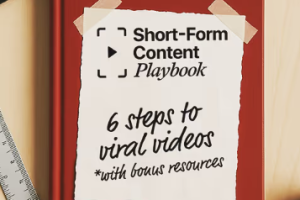

Creator College – Short-Form Content Playbook: A Better System for Creating Short Videos
Creating short-form videos sounds simple until you sit down to make one.
You might have a phone, a few ideas, and an Instagram or TikTok account ready to go. But deciding what to post, writing an opening that captures attention, filming the right clips, and editing everything into a clear message can quickly become a time-consuming process.
That is where having a repeatable content workflow can make a difference.
Creator College – Short-Form Content Playbook is a training program associated with creator educator Jun Yuh. It focuses on the process behind short-form content, from deciding what to say to producing videos, evaluating performance, and developing a more consistent publishing routine.
The course is intended for people who want a clearer approach to creating content for platforms such as Instagram Reels, TikTok, and YouTube Shorts. Instead of treating every video as a completely new project, the goal is to develop practical habits and frameworks that can be reused across different topics.
Whether you’re building a personal brand, sharing your expertise, promoting a business, or developing your skills as a creator, understanding the content production process can help you work more deliberately.
What Is the Short-Form Content Playbook?
The Short-Form Content Playbook is a training resource for people interested in creating short videos with a clearer plan.
Short-form content involves more than filming a clip and adding a caption. A video needs a subject, a reason for the viewer to keep watching, a logical sequence, and an appropriate ending. The creator also needs a workable process for producing and publishing content regularly.
For example, a fitness coach could make a video explaining a common training mistake. A designer might show how a project develops from an early concept to the finished result. A business owner could explain a lesson learned while working with customers.
Each video has a different subject, but the production process can follow a consistent sequence: choose an idea, identify the message, write the script, plan the footage, edit the video, and review the result.
The course approaches content creation as a process that can be learned and improved rather than a skill that depends entirely on inspiration.
1. Figure Out What to Post
One of the most common challenges for creators is running out of content ideas.
You may understand your industry well and still struggle to decide what deserves a post. Alternatively, you may have dozens of ideas but find it difficult to choose which ones are relevant to your audience.
A content strategy gives those ideas some direction.
Start by identifying the subjects you can discuss with confidence, the questions your audience regularly asks, and the problems your content can help address. Then consider different ways to communicate those ideas.
A personal trainer could explain common exercise mistakes, demonstrate modifications, discuss how to build a routine, or share lessons from their professional experience. A freelance designer could discuss project planning, client communication, visual decisions, or the process behind a finished design.
These topics provide multiple opportunities for useful content without requiring an entirely new subject every day.
Published descriptions of the Short-Form Content Playbook list resources such as content prompts, content ideas, and a content calendar. Check your specific version to confirm which planning resources are included.
2. Develop Stronger Hooks and Openings
The opening of a short video helps viewers understand why the content may be relevant to them.
A hook is not simply a dramatic statement or a promise of an extraordinary result. It is an introduction that gives the viewer a reason to pay attention.
For example, a generic opening might be:
“Today, I’m going to share some marketing tips.”
A more specific opening could be:
“If your social media posts get views but rarely lead to enquiries, start by reviewing these three things.”
The second example identifies a recognizable situation and tells viewers what the video will address.
Good hooks can take different forms. You might introduce a problem, challenge a common assumption, demonstrate an outcome, ask a relevant question, or preview a useful lesson.
The best approach depends on the audience and the subject. An opening should accurately represent the video rather than create expectations the rest of the content cannot meet.
A structured approach to hooks can make scripting easier because you have a clear starting point before you begin filming.
3. Turn Ideas Into Scripts
Having a useful idea does not automatically make it easy to explain on camera.
Without a plan, a short video can become repetitive, take too long to get to the point, or wander away from its original message. A simple script helps organize the information before recording begins.
A practical structure might include:
- Opening: Introduce the problem, question, or idea.
- Context: Explain why the subject matters.
- Main point: Deliver the lesson, demonstration, or explanation.
- Example: Show how the idea works in a real situation.
- Conclusion: Summarize the message or suggest a relevant next step.
Not every video needs all five parts, and the order can change. A visual demonstration may communicate the main point immediately, while an educational video might need a short explanation first.
The purpose of scripting is not to make every video sound rehearsed. It is to help you communicate clearly and reduce unnecessary retakes.
Published listings for the Playbook mention scripting templates. Verify the current course contents before promising that specific files are included.
4. Plan Your Filming Before You Start
Filming becomes more manageable when you know what footage you need.
Instead of recording random clips and hoping they fit together during editing, plan the shots that will support your message.
For an educational video, that could mean recording yourself speaking, capturing a close-up demonstration, showing a relevant tool, or filming a short sequence of the process you are explaining.
A business owner creating a behind-the-scenes Reel might capture several moments during the workday and later combine them with a voiceover.
This approach can also help with batching. If you need several videos, you may be able to record similar shots during the same session rather than setting up and filming everything separately.
Preparation does not have to be complicated. A short shot list and a clear understanding of the video’s message can be enough to get started.
The Playbook’s published materials reference filming and content-production guidance. Review the exact version to confirm the depth of its filming instruction and any associated checklists.
5. Understand Editing and Content Production
Editing helps turn raw footage into a coherent video.
The process may involve removing unnecessary pauses, arranging clips, adding captions, adjusting pacing, incorporating supporting footage, and making sure the final video communicates its point clearly.
The right amount of editing depends on the subject and the creator’s style. A straightforward educational video may benefit from clean cuts and readable captions, while a process-based video may need more visual variety.
The important consideration is whether each editing choice supports the message.
For example, captions can help viewers follow spoken information when watching without sound. Supporting footage can make a process easier to understand. Removing repeated explanations can keep the video focused.
More effects do not automatically mean better content. A simple video with a clear message can be more useful than an elaborate edit that distracts from the subject.
A repeatable production process can also help creators manage their time. Once you know how to plan, record, edit, and publish a video, you can refine that workflow as you gain experience.
6. Understand Engagement and Trends
Trends can offer inspiration, but not every popular format is suitable for every creator.
A sound or video format may be popular because it fits a particular audience, joke, situation, or cultural moment. Copying it without adapting the idea to your subject can leave viewers wondering why the content is relevant.
A more deliberate approach is to identify what makes a format work and decide whether that underlying idea suits your message.
For instance, a trend built around contrasting expectations with reality might work for a freelancer explaining the difference between how a project looks in a portfolio and how the process actually unfolds.
The creator can adapt the structure while keeping the content relevant to their own experience.
Engagement should also be evaluated in context. Views alone do not tell you whether a video attracted the right audience, communicated a useful idea, or supported a business goal.
Depending on your objectives, it may be useful to review watch time, completion rate, shares, saves, meaningful comments, profile visits, and enquiries.
The aim is to learn from performance rather than assume that every trend or high-view video is automatically valuable.
7. Learn From Videos That Underperform
Not every video will perform as expected. A useful content system should include a way to review weaker results without treating every unsuccessful post as a reason to start over.
Begin by looking at the video’s purpose and execution.
Was the subject relevant to your intended audience? Did the opening make the topic clear? Was the main point easy to follow? Did the video take too long to deliver its message? Were the visuals suitable for the subject?
These questions can help you identify possible improvements.
For example, an educational video may contain useful information but begin with a lengthy introduction. Another video might have a strong opening but fail to explain the main point clearly. A third might reach viewers who are interested in entertainment rather than the service the creator offers.
Each situation calls for a different response.
The published course description lists a lesson on fixing underperforming content. Confirm the precise framework taught in your version before describing its specific steps.
8. Build a Sustainable Content Routine
Consistency is easier to maintain when content creation fits into your schedule.
A creator who attempts to invent, script, film, and edit a new video from scratch every day may eventually find the process difficult to sustain. Planning several ideas in advance can reduce some of that pressure.
A weekly workflow might involve choosing topics on one day, drafting scripts on another, filming several videos in one session, and editing or scheduling the content afterward.
The right schedule depends on your workload, available equipment, publishing goals, and the complexity of your videos. There is no universal posting frequency that guarantees growth.
A sustainable routine should leave room for experimentation and improvement without making content creation the only activity that matters.
For a business owner, the process should also support broader goals. Content might be intended to educate prospective customers, explain a service, build trust, or direct interested viewers to a relevant resource.
Defining that purpose helps keep your publishing routine connected to something more meaningful than posting for the sake of posting.
What Resources May Be Included?
Published listings for Creator College – Short-Form Content Playbook describe a self-paced training library with video lessons and downloadable resources.
Depending on the version, listed materials include:
- Video lessons on content creation.
- Short-form content prompts.
- A collection of content ideas.
- Scripting templates.
- Hook-writing resources.
- A content calendar.
- Filming checklists.
- Guidance on engagement and improving underperforming content.
These inclusions are based on third-party product descriptions, not a guarantee that every seller’s version is identical. Confirm the actual files and access arrangements before publishing them as guaranteed product features.
Who Should Consider This Course?
Beginner content creators: People who are still developing a repeatable process for choosing topics, scripting videos, and filming content may appreciate a structured starting point.
Personal-brand builders: Professionals who want to communicate their expertise through short-form video can use a planning process to connect their subjects with their audience’s interests.
Entrepreneurs and small-business owners: Short-form videos can help explain products, answer customer questions, demonstrate expertise, and introduce the people behind a business.
Freelancers and service providers: Designers, consultants, coaches, and other professionals may use video content to explain their process and communicate their approach.
Existing creators: People who already publish videos may want to review their planning, scripting, production, and content-evaluation habits.
The course is primarily about short-form content creation. If you need advanced paid advertising instruction, technical video production, or detailed platform analytics training, check the syllabus to determine whether it addresses those specific needs.
Final Thoughts
Creator College – Short-Form Content Playbook focuses on the practical work behind short-form video: deciding what to post, developing a message, scripting, filming, editing, and learning from the results.
Its main appeal is the possibility of replacing scattered content creation with a more organized workflow. Instead of starting from a blank page each time, creators can develop a collection of ideas, plan their production, and refine their approach as they gain experience.
For people building a personal brand, promoting a business, or learning to create videos more consistently, these skills can provide a useful foundation.
Success still depends on the relevance of your ideas, the quality of your communication, the needs of your audience, and your willingness to improve through practice. No training program can guarantee viral videos, audience growth, or sales.
Frequently asked questions
What is Creator College – Short-Form Content Playbook?
It is a short-form content training program associated with Jun Yuh. The published course descriptions cover content planning, scripting, filming, editing, engagement, and reviewing underperforming videos.
Which platforms is the course relevant to?
The course is marketed around short-form video creation for platforms such as Instagram Reels, TikTok, and YouTube Shorts. Check the curriculum for platform-specific instruction.
Is the Short-Form Content Playbook suitable for beginners?
It may be useful for beginners who want a more structured approach to developing content ideas and producing videos. Review the lessons to ensure they match your experience level.
Does the course include content ideas and scripting templates?
Published product listings mention content prompts, content ideas, scripting templates, hooks, and a content calendar. Verify that these resources are included in the specific version you are purchasing.
Does the course teach filming and editing?
Published descriptions include instruction related to filming, editing, and the content production process. Check the official curriculum for the precise topics and tools covered.


Reviews
There are no reviews yet.