


May Castillo – Algorithm Proof Content
Creating content for your business can quickly turn into a full-time job of its own. You research trends, save ideas, write captions, film videos, design carousels, and publish posts—only to wonder whether any of that effort is helping you attract the right audience.
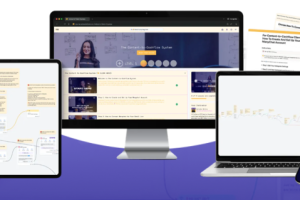
May Castillo’s Algorithm Proof Content takes a different approach to content creation. Instead of making every post from scratch or relying entirely on whatever is trending, the program focuses on reusable storytelling frameworks designed around specific business goals.
The course covers content structures for reach, lead generation, audience nurturing, and sales. It also includes a storytelling system for generating ideas, lessons on the psychology behind conversion-focused content, and a bonus Hooks & CTAs Masterclass. The advertised frameworks are designed for both videos and carousels.
For coaches, consultants, service providers, and creators who use content to grow a business, this approach offers a practical way to think more strategically about what to publish and why.
Rather than treating every social media post as an isolated creative task, the emphasis is on giving each piece of content a clear purpose.
What Is Algorithm Proof Content?
Algorithm Proof Content is a content strategy training program created by May Castillo, a content strategist who works with businesses on storytelling, marketing, and audience growth.
The central idea is straightforward: you don’t have to reinvent your entire content strategy every time a platform changes its features or a new trend appears.
Social media algorithms influence which posts people see, but the purpose of a business’s content goes beyond reach alone. A post can introduce your brand to new people, explain a problem you solve, build trust with potential customers, or encourage someone to take the next step.
The program focuses on repeatable structures that help creators approach these different objectives more deliberately.
According to the creator’s official sales page, the training includes frameworks for videos and carousels, an idea-generation system, conversion psychology principles, and a bonus masterclass on hooks and calls to action.
The aim is to make content planning less dependent on constant inspiration and more connected to your business goals.
Create Content With a Clear Purpose
One of the most useful habits in content marketing is deciding what a post should accomplish before you start writing or recording it.
Without that decision, it’s easy to publish content simply because you feel you need to remain active. You may share something interesting without connecting it to your audience’s needs or your business’s services.
Algorithm Proof Content organizes its advertised frameworks around four broad objectives.
1. Content for Reach
Reach-focused content introduces your ideas to people who may not know your business yet.
For a consultant, this might mean explaining a common mistake in their industry. A designer might share a useful visual principle, while a coach could address a familiar challenge faced by their audience.
The goal is to make the subject relevant and easy to understand for someone encountering your content for the first time.
Reach can help expand awareness, but it is only one part of a broader strategy. A large number of views does not automatically translate into qualified leads or paying customers.
2. Content for Lead Generation
Lead-generation content is intended to encourage interested people to take a measurable next step, such as joining an email list, requesting information, or downloading a resource.
This type of content generally works best when the offer is relevant to the problem being discussed.
For example, a business consultant might publish an educational post about a common operational challenge and invite readers to download a related checklist.
The content provides a useful reason for the audience to continue the conversation rather than asking for contact information without context.
3. Content for Audience Nurturing
Not every potential customer is ready to buy the first time they discover your business.
Some people need more information about your approach, a better understanding of their problem, or reassurance that your service is relevant to them.
Nurturing content helps develop that relationship over time. It might explain how a process works, address common objections, share lessons from experience, or clarify what customers should consider before making a decision.
The purpose is to build understanding and trust rather than push for an immediate sale in every post.
4. Content for Sales
Sales-focused content connects your expertise with a specific offer.
It can explain who a service is for, what problem it addresses, how the process works, and what a potential customer should do if they want to learn more.
Good sales content should also set realistic expectations. It needs to communicate the offer clearly without relying on exaggerated promises or implying that the same result is guaranteed for everyone.
By separating these four objectives, the course’s framework-based approach encourages creators to consider the role of each post within their wider marketing activity.
Stop Starting Every Post From a Blank Page
Creative blocks are frustrating, particularly when content creation competes with client work, administration, and other business responsibilities.
You may know your subject well but still struggle to turn your expertise into something people want to read or watch.
Algorithm Proof Content includes a storytelling system intended to help users generate ideas and develop content without repeatedly searching social media for inspiration.
The underlying principle is that useful content ideas often come from the questions, problems, misconceptions, and decisions your audience encounters regularly.
For example, a fitness coach could explore why beginners struggle to maintain a routine. A business consultant might explain why a seemingly productive workflow creates unnecessary complexity. A marketing professional could discuss the difference between attracting attention and generating qualified leads.
Each topic can lead to several different posts, depending on the question being addressed and the audience’s level of awareness.
Turn Your Expertise Into Repeatable Content
A repeatable process can make it easier to move from an initial idea to a finished post.
You might begin with a question customers frequently ask, explain the underlying problem, share a useful insight, and conclude with a relevant next step.
The exact structure will depend on the subject and the intended outcome. The important point is that you have a starting framework rather than facing an empty document every time you need to publish.
This can be particularly valuable for professionals who have substantial expertise but find content creation difficult to fit into their schedule.
It can also help you build a more consistent message. Instead of jumping between unrelated trends, you can revisit the themes most relevant to your audience and business.
Use Storytelling to Make Your Message More Memorable
People encounter an enormous amount of information online. A post can contain useful advice and still struggle to hold attention if the message is unclear or disconnected from the reader’s experience.
Storytelling provides a way to organize information around a recognizable situation, challenge, change, or lesson.
This doesn’t mean every post needs a dramatic personal story. A short example, a common mistake, a practical demonstration, or a clear explanation of cause and effect can also make an idea easier to follow.
Move Beyond Generic Tips
Consider the difference between publishing a general statement such as “Improve your marketing strategy” and explaining a specific situation in which a business attracts plenty of attention but struggles to turn that attention into inquiries.
The second example gives the audience a problem they can recognize and a reason to keep reading.
From there, you can explain the possible causes, share a useful perspective, and suggest a next step.
That approach gives your content a clear direction. It also helps connect your expertise with the problems your audience actually wants to solve.
The storytelling focus of Algorithm Proof Content is intended to help creators develop this kind of structured communication for videos and carousels.
Understand the Psychology Behind Conversion-Focused Content
Content marketing isn’t only about producing information. It’s also about helping people understand why a subject matters and what they can do about it.
The program advertises training on three psychology principles related to conversion-focused content. The publicly available description does not fully detail every lesson, so buyers should consult the official curriculum for the precise concepts covered.
Even without relying on exaggerated psychological tricks, several useful principles can guide your content.
Make the Problem Easy to Recognize
People are more likely to engage with a message when they understand how it relates to their own situation.
A specific description of a challenge can be more useful than broad language about success or improvement.
Explain the Value Clearly
Your audience should be able to understand what they might learn, why the information matters, and how it relates to a decision they need to make.
Clear communication is generally more useful than vague claims about transformation.
Give People a Relevant Next Step
A call to action should fit the content that came before it.
Someone reading an introductory educational post may be ready to explore a free resource. Someone who already understands the problem and is comparing solutions may be more interested in a service page or consultation.
The next step should make sense in context.
These principles can help you develop content that supports the customer’s decision-making process rather than simply chasing likes and comments.
Write Stronger Hooks and Calls to Action
The opening line of a post or video influences whether people decide to keep paying attention.
A hook can introduce a question, identify a common frustration, challenge an assumption, or promise a useful explanation. Its job is to establish relevance—not to trick someone into consuming content that fails to deliver.
Algorithm Proof Content advertises a bonus Hooks & CTAs Masterclass, including the creator’s 5-Hook Method.
Create Openings That Earn Attention
For example, a generic opening might say:
“Here are some content marketing tips.”
A more specific opening could be:
“Posting three times a week isn’t helping if every post speaks to a different audience.”
The second version introduces a clear issue and gives a relevant audience a reason to continue.
However, a strong hook must match the content that follows. An attention-grabbing statement that exaggerates the problem or promises an unrealistic outcome may damage trust rather than build it.
Make Calls to Action Feel Natural
A call to action tells the reader what they can do next.
Depending on the goal of the post, that might mean saving a useful checklist, joining an email list, exploring a service, or replying with a question.
A relevant call to action creates continuity between the information and the next step. It should not feel disconnected from the subject or demand a commitment that the content has not earned.
Learning to connect hooks, useful information, and clear calls to action can improve the structure of your content, even though it cannot guarantee engagement or sales.
Apply the Frameworks to Videos and Carousels
Different content formats offer different ways to communicate an idea.
A carousel can break a topic into a sequence of slides, making it useful for step-by-step explanations, comparisons, and educational content.
A short-form video can combine spoken explanations, demonstrations, on-screen text, and visual examples. It may be especially useful when tone, movement, or showing a process helps communicate the message.
Algorithm Proof Content advertises frameworks for both formats, allowing learners to consider how a content objective can be expressed through different creative approaches.
You do not necessarily need to develop a completely different message for every format. A single useful idea may support a video, a carousel, an email, and a longer educational post.
The presentation should change to suit the format, but the central message can remain consistent.
This makes the framework-based approach potentially useful for creators who want to get more value from their expertise without publishing disconnected content across every platform.
Who Should Consider Algorithm Proof Content?
The program is most relevant to people who use content as part of a business or professional marketing strategy.
Coaches and consultants: If you sell expertise, your content can explain problems, demonstrate your approach, answer common questions, and help potential customers understand your services.
Service providers: Freelancers and business owners may benefit from a more organized way to communicate their value and encourage relevant inquiries.
Personal-brand creators: If your reputation and expertise are important to your business, storytelling frameworks can help you communicate your ideas more consistently.
Social media managers: The advertised video and carousel frameworks may provide a useful starting point when planning content for clients with different objectives.
Entrepreneurs and small business owners: If you create your own marketing content, a structured approach may help you use your time more deliberately.
Creators who feel stuck: If you repeatedly run out of ideas or spend too long researching trends, an idea-generation process may help you establish a more sustainable routine.
The program may be less suitable for someone looking for detailed technical training in video editing, graphic design software, paid advertising, or advanced analytics. Its advertised emphasis is on storytelling and content structure rather than a comprehensive technical course in every area of digital marketing.
What to Check Before Buying
Before purchasing Algorithm Proof Content, review the current offer and decide whether it matches your needs.
- Review the curriculum: Confirm the specific frameworks, lessons, and resources included in the current version.
- Check the course length: The creator’s sales page describes the core training as less than two hours. Verify the current presentation and any additional materials before purchasing.
- Confirm the price: The official page has displayed promotional pricing, including a €97 offer and a regular price of €197. These are advertised prices, not a guarantee of the price available when you buy. Check the live checkout page.
- Read the refund policy: The sales page states that the digital product is non-refundable. Review the current terms before completing your purchase.
- Check access terms: Confirm how the content is delivered, how long you can access it, and whether any additional resources are included.
- Set realistic expectations: Content frameworks can help organize your marketing, but audience growth, leads, and sales depend on your offer, audience, execution, and market conditions.
Final Verdict: Is Algorithm Proof Content Worth Considering?
May Castillo’s Algorithm Proof Content is designed for business owners and creators who want to approach content with more intention and less dependence on constantly changing trends.
Its main appeal is the combination of storytelling frameworks, content idea development, conversion psychology, and hooks and calls to action. The program focuses on helping users choose a content format and give each post a defined role in their marketing strategy.
For coaches, consultants, and service providers, this may be a useful approach to explore if content creation feels repetitive or disconnected from business goals.
The course is not a guarantee of viral posts, a steady stream of leads, or increased revenue. Its value will depend on how well the frameworks fit your audience and how consistently you put them into practice.
In short: Algorithm Proof Content offers a structured approach to storytelling-led content creation. It may suit business owners who want to plan videos and carousels around reach, nurturing, lead generation, and sales rather than relying exclusively on trends or spontaneous inspiration.
Official creator page: https://talktomay.com/algorithmproof/



Reviews
There are no reviews yet.